The layout of your staircase drives the price of a stair lift far more than the brand on the seat does. Two households can buy the same manufacturer’s equipment and pay figures that are thousands of dollars apart, because one has a straight run of thirteen steps and the other has two turns and a mid landing.
This page gives real installed ranges rather than a form that promises pricing after you hand over a phone number. Every number below is a range, and the range exists because staircases vary. The written quote after a free assessment is where the guessing stops.
Five factors account for nearly all the variation between one quote and another.

This is the single biggest lever. A straight rail is cut from stock. A curved rail is fabricated for one staircase and no other.

Each turn adds rail sections, joints, and fabrication time.

Higher capacity units carry heavier drive components and cost more.

Outdoor units need weatherproofing, sealed components, and a protective cover.

Powered swivel, powered footrest, folding rail at the bottom landing, and remote controls each add to the total.
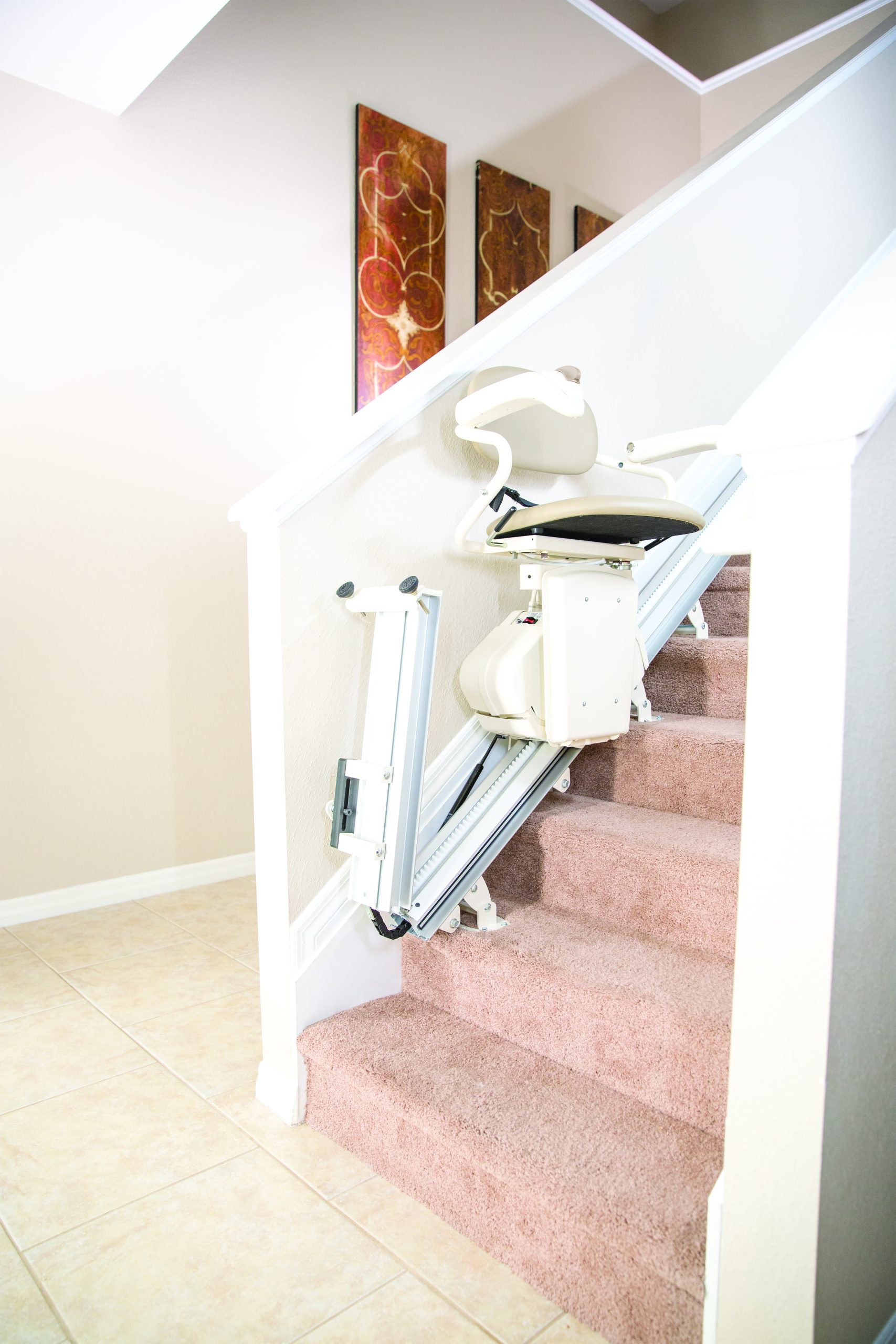
A straight stair lift on a standard staircase typically lands between $3,000 and $6,000 installed in New Hampshire. Shorter runs with a basic feature set sit at the low end. Longer staircases, higher capacity models, and powered options push toward the upper end.
An installed price should cover the equipment, the rail cut to your staircase, delivery, installation labor, full safety testing and handover, and the manufacturer warranty period. Ours does. When you compare quotes, check that all six are present, because equipment only pricing looks cheaper on paper and stops looking cheaper the moment labor is added.
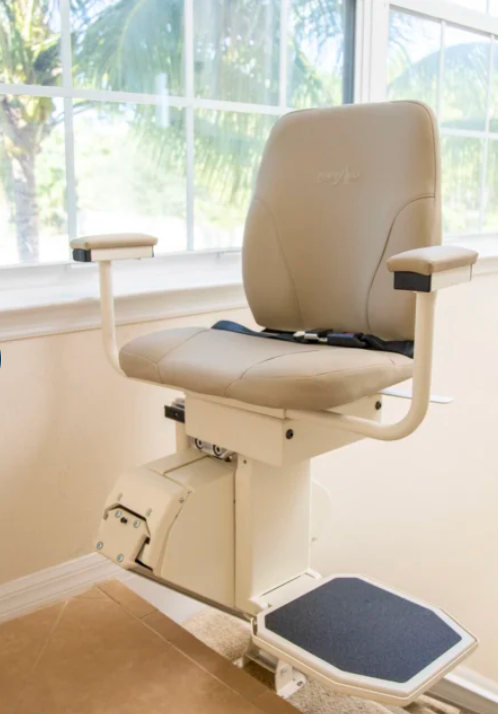
The SL300 is the entry point in the straight range at 300 pounds capacity, 20 feet per minute travel, and a 19 inch wide seat. It suits a single rider on a standard staircase and sits at the lower end of the band.
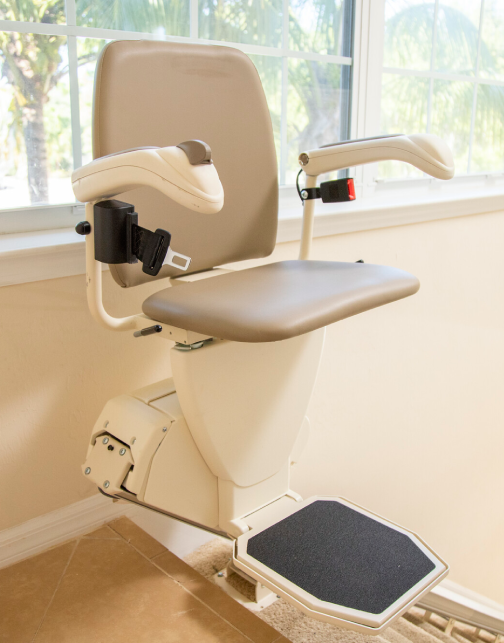
The SL600 adds a powered footrest and easier mounting and dismounting, placing it mid band. The SL600HD carries 600 pounds with armrest controls and sits at the top of the straight range, and it is the model to look at when capacity or seat width is the deciding factor rather than price.
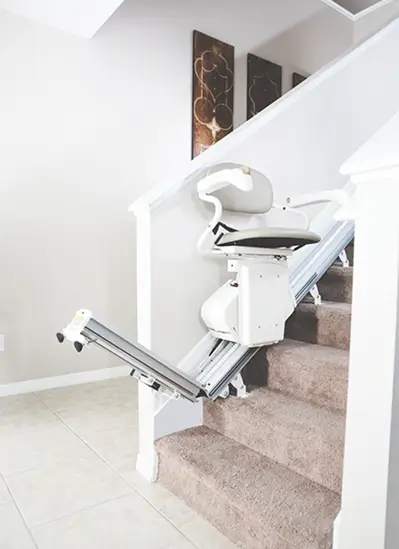
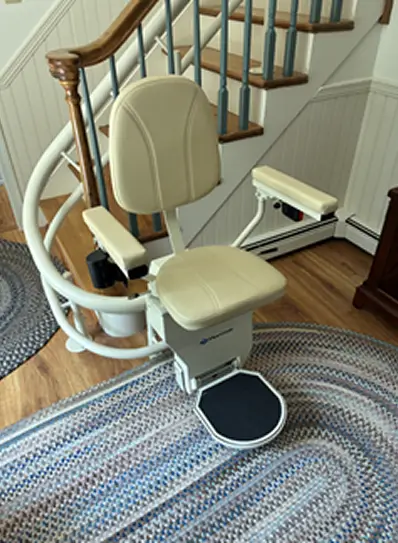
Curved stair lifts typically run $10,000 to $20,000 installed, and staircases with several turns can exceed that.
The jump is not a markup. A curved rail is measured to your staircase, drawn, and manufactured as a one off. The tooling, the fabrication hours, and the longer installation all sit in that number. Nobody can hold curved rail inventory, which is also why curved units cannot be rented.
A single gentle curve is the cheapest curved job. Add a 90 degree turn and the rail gains sections and joints. Add a mid landing where the rider passes a doorway, and the rail has to clear it. Add an intermediate stop so the lift can park at that landing, and you add controls and a park point. Each of those steps moves the price, which is why a firm curved quote given over the phone is either padded or incomplete.
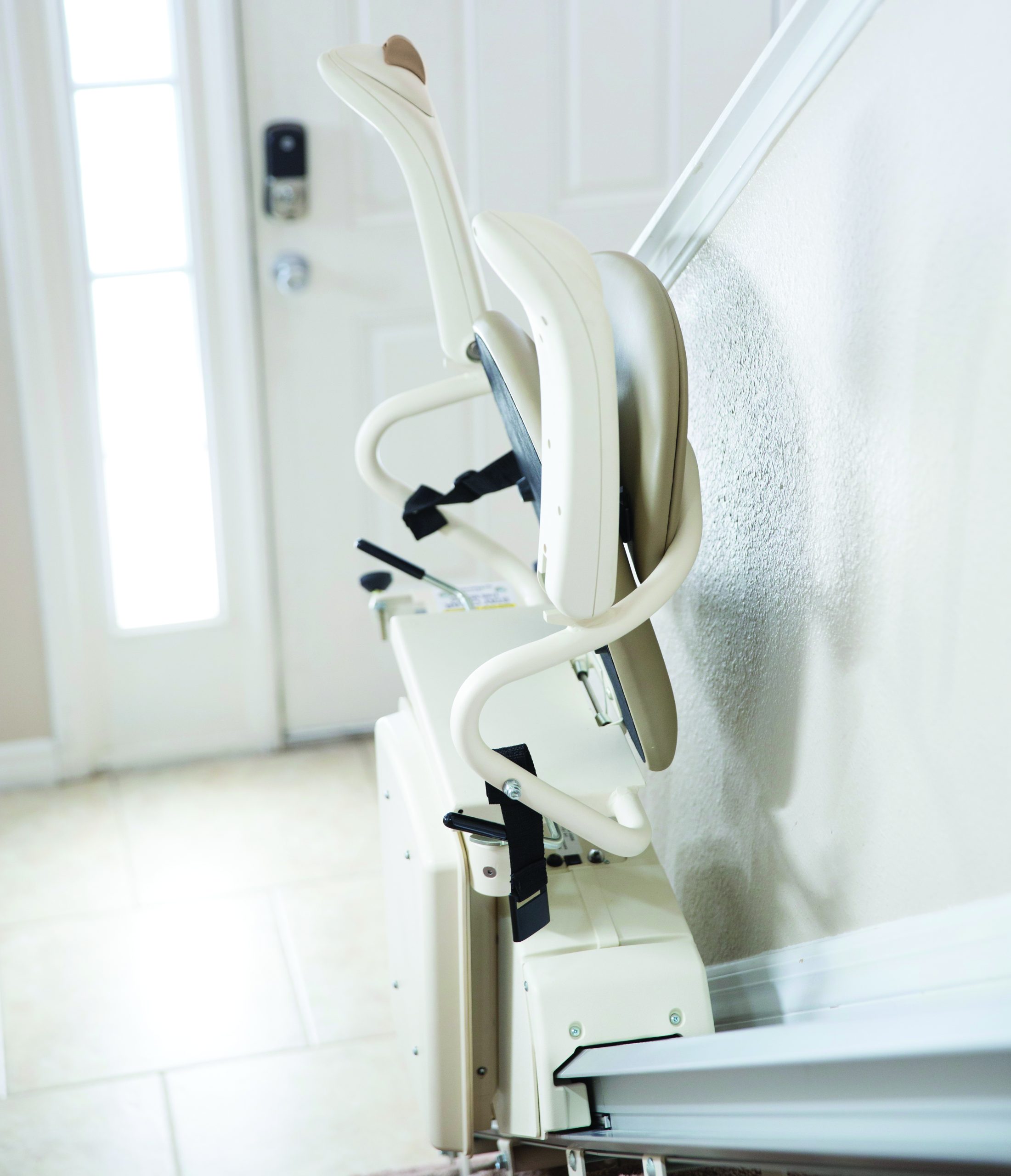
The Helix carries 350 pounds on a space saving rail with a 16 inch folded width from the wall, which makes it the option for tighter stairwells. It sits in the middle to upper part of the curved band depending on the number of turns.
The UP Curve uses a modular rail system, which shortens the wait between order and installation considerably compared with a fully bespoke rail. It also brings a powered swivel as part of the package. Pricing is comparable to the Helix on similar staircases, and the real difference is turnaround time.
An outdoor straight stair lift typically runs $4,500 to $9,000 installed. The premium over an indoor unit buys sealed components, marine grade or powder coated finishes, weather resistant upholstery, and a protective cover for the carriage.
In a New England climate that premium is not optional. Freeze and thaw cycles, road salt carried onto porch steps, and months of moisture will find every unsealed component on an indoor unit installed outside. A properly specified outdoor lift is the cheaper purchase across ten years.
Model | Capacity | Speed | Rail | Typical installed range |
Pinnacle SL300 | 300 lb | 20 FPM | Straight | $3,000 to $4,500 |
Pinnacle SL600 | 350 lb | 20 FPM | Straight | $3,800 to $5,500 |
Pinnacle SL600HD | 600 lb | 20 FPM | Straight | $4,500 to $6,500 |
Harmar Helix | 350 lb | 20 FPM | Curved | $10,000 to $17,000 |
Harmar UP Curve | 350 lb | 20 FPM | Curved | $11,000 to $18,000 |
Ranges are installed prices for typical New Hampshire staircases and are reviewed regularly. Your staircase decides where in the band you land.
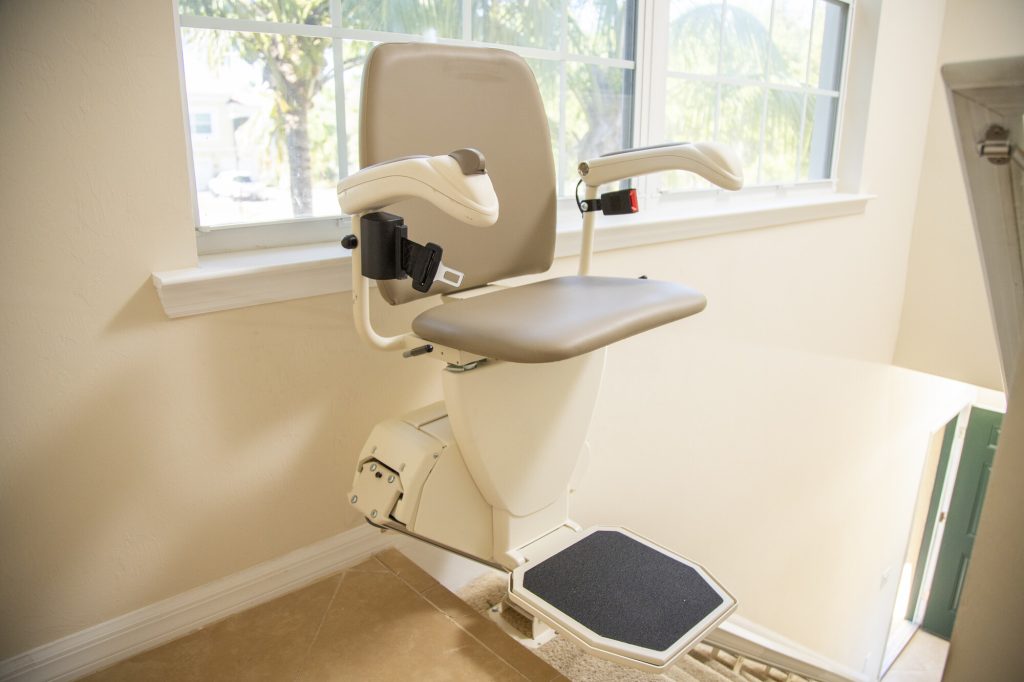
Buying is not the right answer for everyone, and we would rather place the right arrangement than the most expensive one.
The one year lease covers a straight stair lift with installation, service during the term, and removal at the end. Monthly cost is lower than short term rental. It suits an uncertain timeline, a progressive condition where the length of need is unclear, or a household that is not ready to commit to a purchase.
Rental is month to month on straight rails only and is built for short term needs such as recovery from surgery. There is an installation and removal fee charged once, plus a monthly rate for the equipment. Minimum terms apply.
Route | Upfront | Ongoing | Five year total position |
Purchase | Full installed price | Service visits and batteries | Lowest total, you own the equipment |
One year lease | Lower initial outlay | Monthly payment for 12 months | Competitive for one year, costly if renewed repeatedly |
Month to month rental | Install and removal fee | Monthly rate, no end date | Highest total past roughly a year |
The crossover point sits somewhere around eight to twelve months. Past that, buying costs less. Ask us to run both numbers side by side on your quote rather than choosing on the monthly figure alone.
Stair lift batteries typically last three to five years. Replacement is inexpensive and is usually handled during a routine service visit. Parking the carriage on a charge point after every trip is the single biggest factor in how long a set lasts.
We recommend an annual preventative visit for a standard household and a bi-annual schedule for heavy use, multiple riders, or outdoor units. A visit covers the rail and carriage, battery health, safety sensors, the seatbelt, swivel and footrest function, and lubrication.
Wear items such as batteries, upholstery, and drive components fall outside warranty coverage over time. Because we stock parts locally for the lines we carry, out of warranty repairs are usually a single visit rather than a wait on a shipment from another state.
We work with veterans regularly through the VA. Which program applies depends on the modification. The Home Improvements and Structural Alterations grant carries a lifetime benefit of up to $6,800 for service connected disabilities, though the VA’s published exclusion list names stair glides and porch lifts among items HISA does not fund, while permanent modular ramping does qualify. The Specially Adapted Housing and Special Home Adaptation grants operate under separate rules with higher limits that adjust annually.
Do not take a vendor’s word on this, including ours. Confirm current eligibility with the Prosthetic and Sensory Aids Service at your local VA medical center, and we will supply whatever documentation the application needs.
New Hampshire Medicaid home and community based services waivers can cover accessibility equipment for eligible participants, including the Choices for Independence waiver for older adults and adults with physical disabilities. Coverage is not guaranteed and it is not automatic. It is worth asking your case manager directly, because the answer depends on the waiver, the assessment, and available funding.
Medicare classifies a stair lift as a home modification rather than durable medical equipment, so Original Medicare does not cover it. A letter of medical necessity from a physician does not change that classification. Some Medicare Advantage plans carry supplemental home modification benefits, and those are worth a phone call to the number on the back of the card.
Several categories of assistance exist outside government programs. State Assistive Technology Act programs sometimes offer low interest loans or reuse programs. Local Area Agencies on Aging and ServiceLink resource centers in New Hampshire can point to regional funds. Disease specific foundations covering conditions such as MS and ALS often maintain equipment grants. Municipal and county home repair programs occasionally include accessibility work.
A quote you can act on is itemized. Look for the equipment and model number, the rail length or configuration, installation labor, the warranty term and what it covers, and any service plan priced separately rather than folded in silently.
Ask these before signing: what the lead time is in writing, who performs the installation, what the warranty excludes, what a service call costs outside the warranty, and what happens if the lift needs removing in two years.
Three things should make you pause. Pressure to close the same day and discounts that expire on the spot. Vague lead times with no date attached. A curved price quoted without anyone measuring the staircase.
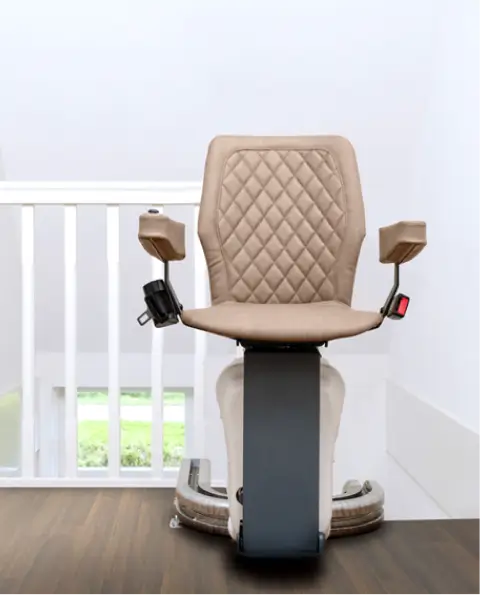
Want to see how a Straight Airlift would look in your home?
Answers to your real estate questions and concerns.
dont worry we're free for consultation, just click button below.
A straight stair lift typically runs $3,000 to $6,000 installed and a curved lift typically runs $10,000 to $20,000 installed. Outdoor straight units sit between the two. The staircase, not the brand, decides where your quote lands.
The rail is manufactured for your staircase specifically and cannot be built from stock or reused anywhere else. Measurement, drawing, fabrication, and a longer installation all sit inside the price, and every additional turn or landing adds to each of those.
Refurbished straight lifts can be good value, since straight rails are routinely cut down and rebuilt. Check who backs the warranty, how long it runs, and the age of the carriage rather than just the rail. Refurbished curved units rarely make sense, because the rail almost never matches a second staircase.
Most private health plans treat a stair lift as a home modification and decline it. Long term care policies sometimes include an equipment or home modification benefit, and some homeowner or accident policies respond after an injury. Read the policy language and ask the insurer directly rather than assuming.
Nationally quoted averages sit around $4,000 for straight installations and around $14,000 for curved. Averages are of limited use here, because the spread within each category is wide and driven entirely by the staircase.
No. Original Medicare classifies stair lifts as home modifications rather than durable medical equipment, which places them outside Part B coverage. Some Medicare Advantage plans include supplemental home modification benefits, so check with your plan.
Fully funded stair lifts are uncommon. The routes that come closest are Medicaid waiver programs for eligible participants, some disease specific foundation grants, and equipment reuse programs that place refurbished units at no cost. Eligibility is means tested or condition specific in nearly every case.
Alternatives include relocating the bedroom and a bathroom to the ground floor, installing a vertical platform lift where a wheelchair is involved, adding a residential elevator for long term multi floor access, or fitting a second handrail and better stair lighting where the difficulty is mild. Which one fits depends on the mobility need rather than the budget.
A free in-home assessment gives you a measured recommendation and an itemized written quote with no obligation and no pressure to decide on the spot.