Blog

Vertical Platform Lift vs. Ramp Space, Slope, Weather, & Accessibility Considerations

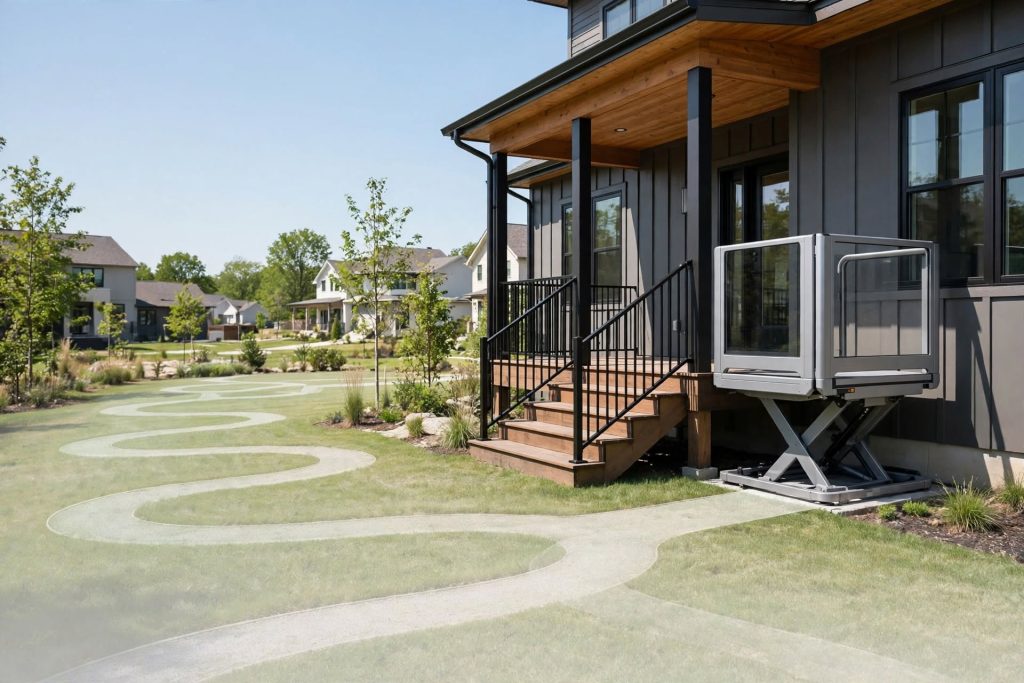
Vertical Platform Lift vs. Ramp: Space, Slope, Weather, & Accessibility Considerations

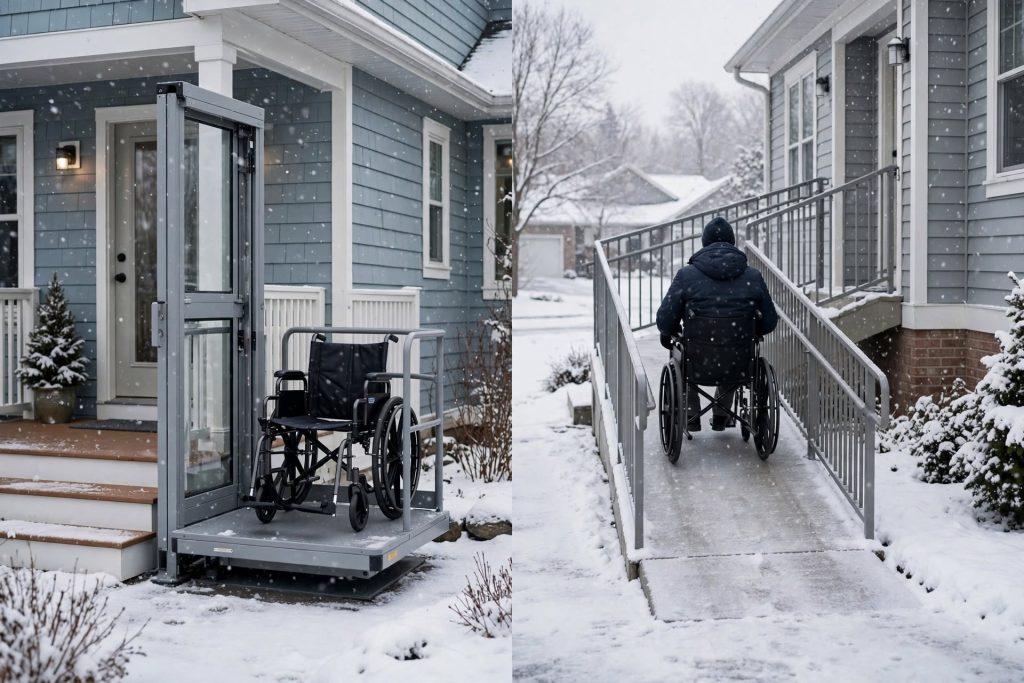
A vertical platform lift and a ramp solve the same problem, which is getting a wheelchair or scooter user up a change in level. They solve it so differently that the choice is rarely a matter of preference. Below a certain rise a ramp wins on cost and simplicity. Above it, the slope rule produces a structure most properties cannot accommodate. Four factors decide it, and arithmetic does most of the work. The Slope Rule & What It Produces Accessibility standards call for a maximum slope of one inch of rise per twelve inches of run. That ratio is the
Read More »
Home Elevator Installation Requirements Space, Electrical, Framing, & Access Planning

Home Elevator Installation Requirements: Space, Electrical, Framing, & Access Planning

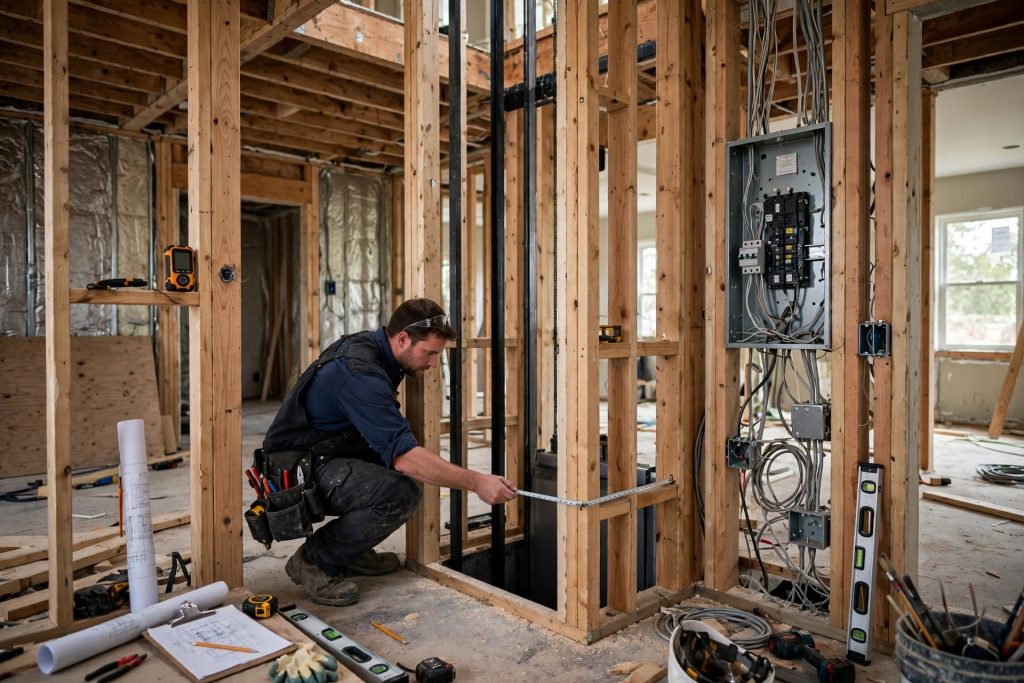
Home elevator installation gets quoted in months, but what decides most projects is not time or budget. It is a handful of measurements taken in the house. A home either has somewhere an elevator can physically go or it does not, and no amount of money changes an overhead clearance figure. Working through the requirements in order tells you early where a project stands. Space Requirements The Footprint Has to Line Up An elevator takes floor area from every level it serves, and it takes that area from the same position on each floor. This is the part homeowners underestimate

Read More »
Residential Elevator Safety Features Doors, Controls, Sensors, & Emergency Systems

Residential Elevator Safety Features: Doors, Controls, Sensors, & Emergency Systems

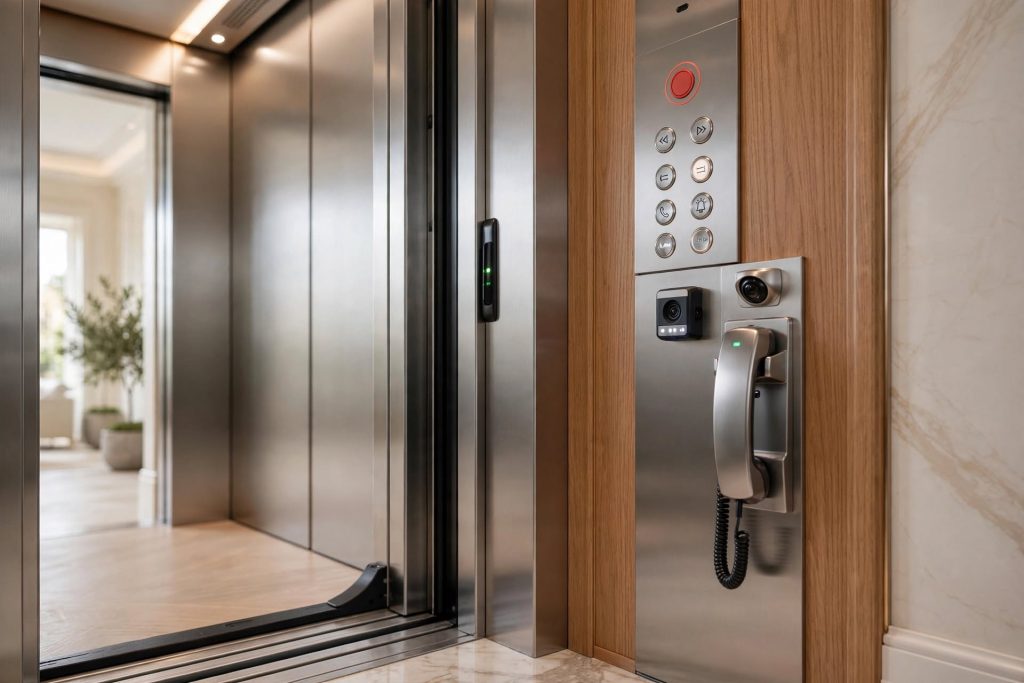
Residential elevators carry people several feet in the air inside an enclosed shaft, and the systems making that acceptable are layered rather than singular. No one component is the safety feature. The interlocks, sensors, controls, brakes, and emergency equipment each cover a different failure, designed so the loss of any one does not put a rider at risk. Doors & Interlocks What an Interlock Does The door interlock is the most important safety device on any elevator. It combines a mechanical lock with an electrical switch. The mechanical half keeps the landing door locked unless the cab is present at

Read More »
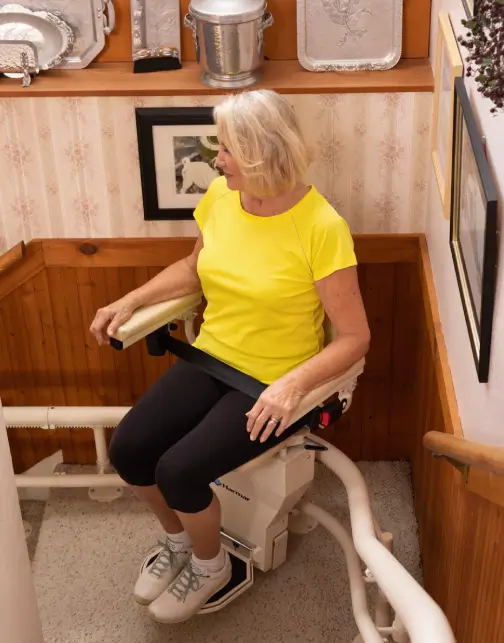
Stair Lift Installation in Older Homes Electrical, Flooring, & Stairway Considerations

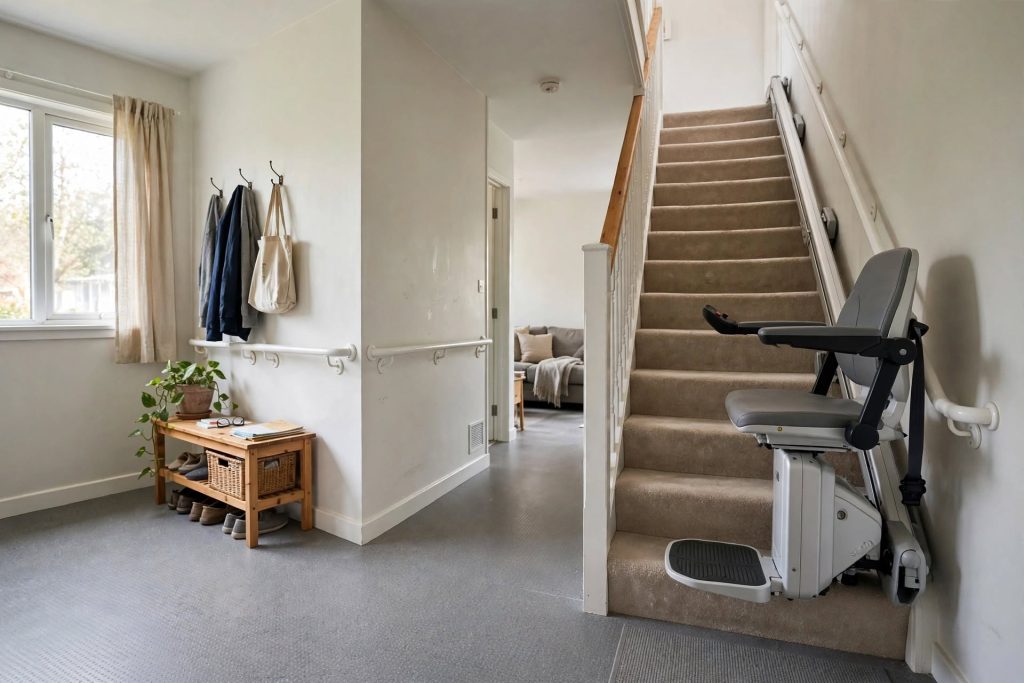
Stair Lift Installation in Older Homes: Electrical, Flooring, & Stairway Considerations

Stair lift installation in a house built in 1910 is a different proposition than in the one built in 2010. The equipment is identical. What changes is everything around it, including where the outlets sit, what the treads are made of, how steep the flight runs, and what the owner wants left untouched. Older houses accept stair lifts more often than their owners expect, and the work goes smoothly when three practical constraints get checked before anything is ordered. Electrical Supply & Where the Outlets Are The Charging Point Requirement Most residential stair lifts run on rechargeable batteries that top

Read More »

What Is a Vertical Platform Lift? A Complete Guide to VPLs for Home Accessibility

If stairs, raised entrances, porches, or changes in floor height are making it difficult to move around a home, a vertical platform lift can provide a practical accessibility solution. But what exactly is a vertical platform lift, how does it work, and how does it compare with a stairlift or residential elevator? A vertical platform lift, often called a VPL or vertical wheelchair lift, is designed to move a person and their wheelchair or mobility device vertically between different levels. The right system depends on the home’s layout, vertical travel distance, available space, accessibility needs, and installation requirements. What Is

Read More »
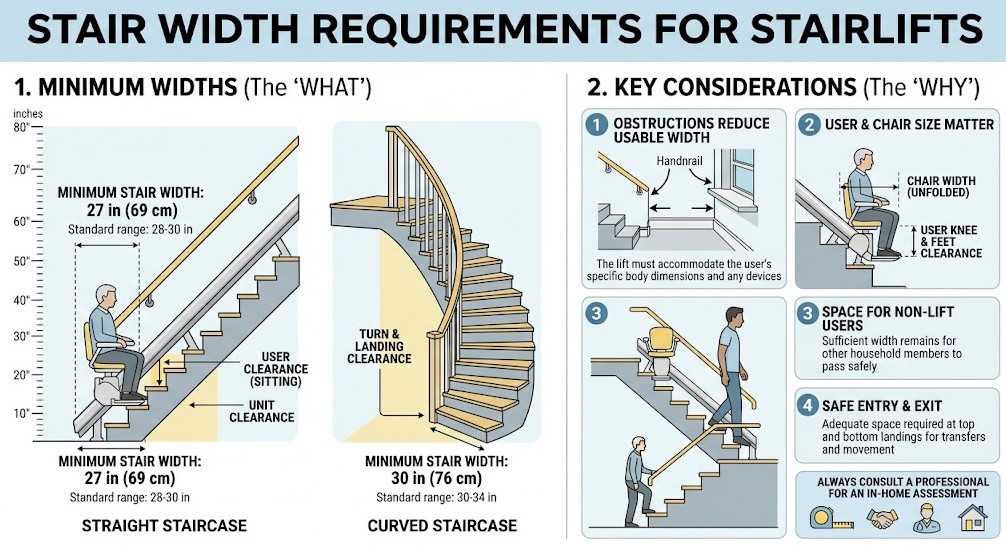
How wide do stairs need to be for a stairlift

How Wide do Stairs need to be for a Stairlift?

If you are considering a stairlift, one of the first questions you may have is: How Wide do Stairs need to be for a Stairlift? The good news is that a staircase does not necessarily have to be wide to accommodate a stairlift. Many modern stairlifts are designed to work in relatively narrow spaces, but the exact requirements depend on the stairlift model, seat configuration, staircase shape, rail position, landing space, and the amount of clearance available. There is no single minimum stair width that applies to every stairlift. For example, Acorn Stairlifts currently states that its Acorn 130 straight

Read More »
About Us

Curved Stair Lift: What It Costs, Why the Rail Drives the Price, and How to Avoid the 8-Week Wait

A curved stair lift installs on any staircase that turns, has a landing, has pie-shaped winder treads, or spirals. Most installations land between $9,000 and $20,000, and a traditional custom rail takes 4 to 8 weeks to manufacture before anyone can install it. Those two facts drive almost every decision that follows. Here is what sits behind them, and how to keep the number at the low end of the range. First, Confirm You Actually Need a Curved Lift Dealers get this wrong in both directions, so check it yourself. You need a curved rail if your staircase has: A

Read More »
Wheelchair Lift for Home What It Costs, What It Needs, and When It Beats a Ramp

Wheelchair Lift for Home: What It Costs, What It Needs, and When It Beats a Ramp

If you are researching a wheelchair lift for home use, you are usually solving one of two problems: getting in the front door, or getting to a floor that a ramp cannot reach. Both come down to one measurement. Grab a tape measure and get the total rise, meaning the vertical distance from the ground or lower floor to the surface you need to reach. That single number decides most of what follows. A wheelchair lift, also called a vertical platform lift or VPL, carries a person and their mobility device straight up. No transferring out of the chair, no

Read More »
Home Accessibility Solutions How to Pick the Right One for Your Home and Budget

Home Accessibility Solutions: How to Pick the Right One for Your Home and Budget

Most people searching for home accessibility solutions already know something in the house has become a barrier. The staircase, the front steps, the second-floor bathroom. What they do not know is which piece of equipment actually solves it, what it costs, and who helps pay for it. Here is the direct answer to all three. The right solution comes down to three questions: what barrier are you removing, can the person walk and transfer into a seat, and how many inches of vertical rise are involved. Answer those and the product choice narrows to one or two options almost every

Read More »
The Ultimate Guide to Residential Elevators Types, Costs, Space Requirements, & Installation

The Ultimate Guide to Residential Elevators: Types, Costs, Space Requirements, & Installation

Multi-story living offers luxury, privacy, and expansive floorplans. However, as homeowners plan to age in place or seek modern architectural convenience, navigating multiple flights of stairs daily becomes a significant hurdle. Residential elevators once viewed strictly as a commercial luxury have evolved into one of the most effective, space-efficient, and value-adding upgrades for modern homes. Today’s home elevators range from sleek, shaftless through-floor lifts to heavy-duty hydraulic and pneumatic vacuum systems. However, choosing the right system requires navigating complex architectural trade-offs: machine room space, pit depth, shaft construction, power requirements, and total turnkey installation pricing. In this definitive buyer’s guide, we

Read More »