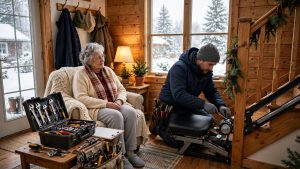
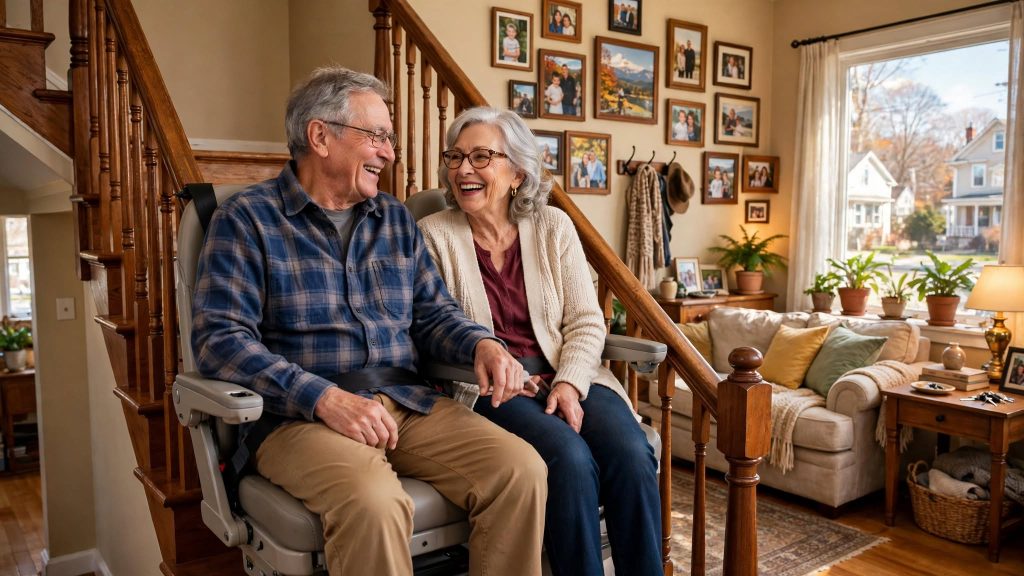
A stair lift for seniors in Manchester NH usually gets looked into after something happens rather than before. Somebody falls on the stairs, a knee replacement is scheduled, or an adult child notices their mother has stopped going upstairs. The equipment is the straightforward part. The harder part is working out if a stair lift suits this particular person, because age on its own decides very little.
What Usually Prompts the Conversation
Four situations account for most of it.
A fall on the stairs changes how a household thinks about the staircase overnight. A planned surgery creates a known window where the stairs will be difficult. A gradual decline in stamina or balance means someone has quietly started avoiding the upper floor. And sometimes a spouse who was helping can no longer do it safely.
The avoidance case is the one families miss. Someone who has stopped going up to a bedroom, or stopped using a basement laundry, has already told you where the barrier is without naming it.
The Numbers Behind the Concern
CDC data gives the context. More than 14 million adults aged 65 and older, roughly one in four, report a fall each year, and falls are the leading cause of injury in that age group. Those falls produce around 3 million emergency department visits and close to 1 million hospitalizations annually.
Stairs account for a meaningful share of in-home falls, which is why they draw attention first.
A stair lift reduces how often someone has to manage a staircase they find difficult. It does not remove fall risk from a house, and nobody should claim it does.
Assessing Fit Rather Than Age
A stair lift suits a specific set of abilities, and those matter far more than a birthday.
Transfer Ability
This is the deciding factor. The rider sits down onto the seat at the bottom, rides up, and stands from the seat at the top. For someone who can stand and pivot reliably, that works without difficulty.
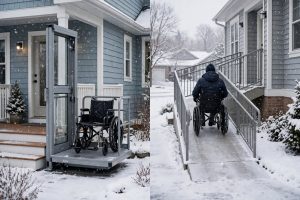
For someone whose transfers are unsafe or exhausting, it does not work, and no feature changes that. Those households need a platform lift or an elevator, which carry the rider and their mobility device together.
Ask about five years out as well as today. If the answer is already borderline, planning for the next option is cheaper than buying twice.
Grip Strength & Dexterity
The rider operates a control on the armrest, fastens a seatbelt, and folds a footrest. Arthritic hands, reduced grip, or limited reach make each harder than a showroom demonstration suggests. Have the person try the controls rather than assuming, since powered options exist for most of these functions.
Vision & Depth Perception
Reduced vision affects the dismount more than the ride. A rider stepping off at the top landing has to judge where the floor is, and a seat that swivels to face the landing squarely makes that safer than stepping off sideways.
Cognitive Factors
Where memory or judgment is affected, the lift has to be simple enough to operate consistently and secure enough that it is not used unsupervised. A key lock is worth specifying, and a demonstration repeated over several days works better than one thorough walkthrough.
Manchester Housing & What It Asks of a Lift
Manchester has a large stock of older housing alongside newer construction, and the staircases in those older properties were built before anybody considered mobility equipment.
Narrow stairways turn up constantly. Widths in the high twenties are routine, and plenty of owners write off their staircase on that basis before measuring properly. Slim models fold to around 10 to 11 inches from the wall, so a 30 inch staircase still leaves roughly 19 inches of clear passage.
Measure from the wall to the outer edge of the tread rather than to the handrail, since a handrail can project three or four inches into the run and cost the margin that made the installation workable.
Steep pitches are common in the same housing, and most models install on inclines between roughly 27 and 52 degrees.
Turns change the cost. A staircase running in one unbroken line takes a rail cut from stock, and one that turns at any point needs a rail fabricated for that flight, which costs several times as much and takes weeks rather than days.
Three-decker and multi-family conversions add a consideration, since a shared staircase may need permission from an owner or association before anything gets mounted.
Features That Matter More for Older Riders
A powered seat swivel turns the seat to face the landing before the rider stands, which removes the effort of a manual swivel and makes the dismount safer where the top landing is tight.
A powered footrest folds and unfolds without the rider bending down at the bottom of the stairs, which is difficult for many of the people who need a stair lift.
Seat width and back support affect how often the lift gets used. A standard seat runs around 19 inches wide with a backrest that may be shorter than expected, and a rider who finds it uncomfortable will use the stairs instead.
A retractable seatbelt, two remote controls so the chair can be called from either landing, and a folding rail where a door opens across the foot of the stairs all address daily friction.
Bringing It Up With a Parent
The resistance is rarely about the equipment. It is about what accepting it seems to admit.
A few approaches help. Frame it around the house rather than the person, since asking what this staircase needs is easier to hear than asking what someone can no longer do. Tie it to something already happening, such as a renovation or a planned surgery. Start with the changes nobody argues with, including better stair lighting and a second handrail.
Whoever will ride it should be in the room and making the decision. Equipment chosen for someone rather than with them gets resisted, and a stair lift that goes unused is worse than none.
Where to Start
Measure the usable stair width at the bottom, middle, and top. Note any turn or landing. Check for a working outlet at either end. Then have the person sit down on a dining chair and stand up from it, which is a reasonable proxy for the transfer the lift will ask of them.
Those four pieces of information settle most of the question, and a free in-home assessment confirms the rest.