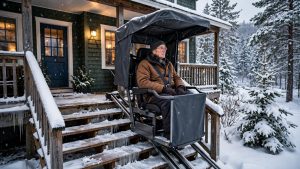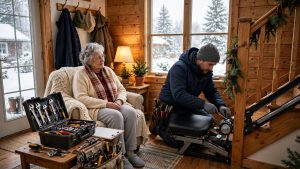
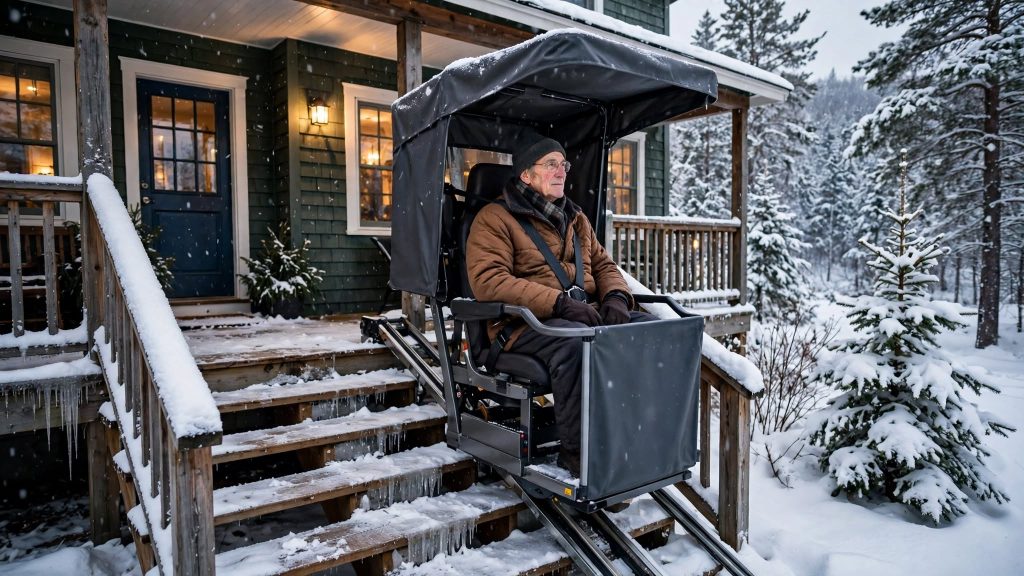
An outdoor stair lift in New Hampshire has a harder job than the same unit in a hallway. It sits through freeze and thaw cycles from November to April, takes road salt tracked onto the steps, holds moisture for months, and still has to work on the morning someone needs to reach a car. Plenty of households get a decade out of one. The ones that go wrong almost always went wrong at the specification stage rather than in service.
Where an Outdoor Stair Lift Makes Sense
The common placement is a flight of exterior steps a rider can sit down on and ride, which usually means front porch steps, back deck stairs, or a run from a driveway up to an entry landing.
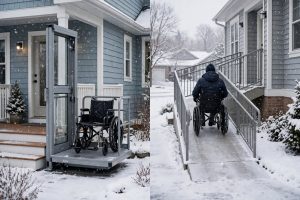
The distinction worth drawing is between a stair lift and a platform lift. A stair lift carries a seated rider, so the person transfers onto the seat and leaves any mobility device at the bottom. A platform lift carries the rider while they stay in their chair or scooter.
If the person walks but finds the climb difficult, an outdoor stair lift is the simpler and cheaper answer. If they use a wheelchair full time, a platform lift is the route.
What Makes an Outdoor Model Different
Sealed Components
Outdoor units are built with sealed drive components, weather-rated wiring, and enclosures that keep spray and condensation out of the electronics. This part of the specification is invisible in a brochure photograph and matters the most over ten years.
Finish & Hardware
Outdoor models use a powder coat finish over the rail and carriage with stainless steel hardware throughout. Ask about the fasteners, because corrosion starts at the hardware rather than the coated surfaces. A unit with a good finish and ordinary steel bolts shows rust at the bracket points first.
Weather-Rated Upholstery
The seat, back, and armrests use marine-grade upholstery that sheds water and tolerates ultraviolet exposure. Indoor fabric left outside holds water, grows mildew, and splits within a season or two.
The Protective Cover
A fitted cover goes over the carriage when the lift is parked, and it is not an optional extra in this climate. It keeps snow off the seat, meltwater out of the controls, and the upholstery dry between rides. Check that it still seals each autumn, since a cover that has stiffened or split is doing less than the owner assumes.
The Indoor Unit Installed Outside
This comes up because the price difference is real. An outdoor-rated stair lift costs meaningfully more than an indoor one, and the temptation to save that money makes sense.
It does not work here. An indoor unit installed outside usually survives one season and starts failing in the second. Water gets into the control board, fasteners corrode, upholstery splits, and the drive wears faster. The repair bill and eventual replacement exceed the premium that was avoided.
A properly specified outdoor lift is the cheaper purchase across its life, which is the only measurement that counts on equipment meant to last ten years.
Snow & Ice Protocol
Clear the Rail Before Riding
Snow and ice on the rail or treads need clearing before anyone uses the lift. A carriage driving through packed snow loads the drive in a way it was not designed for, and the obstruction sensor will usually stop travel anyway. Keep a brush by the door rather than relying on memory.
Where Ice Forms First
Three places collect ice ahead of the rest. Meltwater runs down the rail and pools at the lowest bracket. The footrest sits low and catches drip from the seat above it. And the park position at either end holds the carriage still long enough for anything on it to freeze.
Keep Drainage Open
Leaves and grit collect at the base of the rail through autumn, and that material holds water against the lowest fasteners all winter. Clearing it in November does more for the equipment than anything else.
Mounting on Decks, Porches, & Masonry Steps
Outdoor stair lifts mount to the steps rather than the wall, same as indoor units, so the rail fastens into the structural part of each tread.
On a wood deck or wooden stairs this is straightforward, though framing sometimes needs blocking underneath where brackets land. A deck that already flexes under foot needs attention before a rail goes on it.
Granite, brick, and concrete steps accept brackets with the appropriate anchors, and the steps stay in place because the lift sits alongside rather than replacing them.
Confirm what the steps are built on. Granite slabs sitting on settled fill behave differently than the same slabs on a proper footing, and a rail wants a stable base.
Power & Outages
Outdoor units run on battery power with a charger plugged into a standard household outlet. An exterior outlet in reach of one landing is usually the requirement, and adding a weather-rated one is a short electrician visit.
Battery operation is worth more outdoors than indoors, since the storm that takes the power out tends to be the one that puts snow on the steps.
Batteries lose capacity in the cold, so plan around a conservative number of trips rather than the brochure maximum, and replace a set near the end of its life before winter rather than after a failure.
Permits & Local Requirements
Requirements vary from town to town in New Hampshire. Some jurisdictions treat an exterior stair lift as a straightforward equipment installation, and others want a building permit, an electrical permit, or both.
An installer working the same towns every month knows which applies at a given address and should handle the paperwork. Anyone who says no permit is needed without checking the town is guessing.
Specifying It Right
Three decisions carry the whole project. Confirm the unit is genuinely outdoor-rated rather than an indoor model with a cover added. Confirm the hardware is stainless rather than just the finish being powder coat. Confirm there is a weather-rated outlet within reach of a landing, or budget for an electrician to add one.
Get those three right and the maintenance is a brush by the door and a service visit twice a year.