
Almost nobody buys accessibility equipment early. The purchase follows a fall, a diagnosis, or a discharge date that lands with two weeks of warning. By then the choices have narrowed to whatever arrives fastest, funding applications that take six weeks are off the table, and the household is making a five figure decision during the worst month it has had in years.
Buying ahead of the need is a different exercise. Nothing is urgent, every option stays open, and the price of being wrong is small. The obstacle is rarely money. It is that planning for reduced mobility means admitting it might happen.
What Waiting Actually Costs
The financial part is easy to miss. Medicaid waiver applications, VA grant approvals, and foundation grants all take weeks to months, and most will not reimburse work that started before approval came through. A household in a hurry pays full price for equipment that might have been partly funded with more notice.
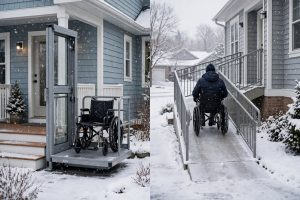
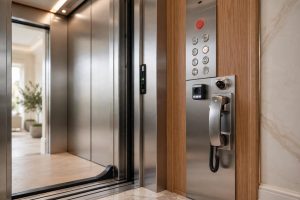
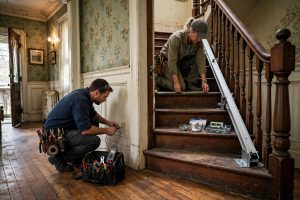
Lead times do the same thing. A straight stair lift goes in within a week or two, which is why it becomes the default answer in a crisis even when it is not the right one. Curved rails take weeks to fabricate, platform lifts need a pad poured and cured, and elevators run months. Urgency shortens none of that, so the person in a hurry gets whichever option is fastest rather than whichever fits best.
Then there is the interim arrangement. A month of rehabilitation facility care while the house gets sorted often exceeds the price of the equipment, so families pay twice.
The Cheapest Time to Do the Work
Some of this equipment is dramatically cheaper when it is built into work that was already happening.
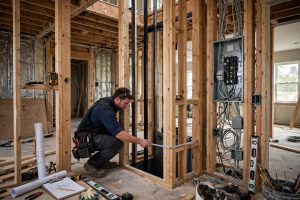
A bathroom being renovated for other reasons is the obvious case. Blocking inside the walls for future grab bars costs almost nothing while the walls are open, and retrofitting anchors into finished tile is a different job at a different price. A curbless shower costs a modest premium inside a planned renovation and a great deal more as a standalone project later.
New construction is the extreme version. An elevator shaft drawn into the plans is far cheaper than one cut into a finished house, and a home designed with 36 inch doorways and a ground floor bedroom needs no accessibility work at all.
Anyone renovating a bathroom, finishing a basement, or building an addition should ask what the accessible version costs. The answer is often a few hundred dollars during the work and several thousand afterward.
What to Buy Early & What to Leave
Not everything should be bought in advance, and the distinction is worth drawing clearly.
Worth Doing Now
Structural preparation is the strongest candidate, because it is cheap while walls are open and expensive afterward. Blocking for grab bars, a doorway framed wider than it needs to be, and conduit run to a future lift location all fall here.
Low cost safety items are worth installing regardless. Better stair lighting, a second handrail, lever door handles, rocker switches, removing loose rugs, and marking the top and bottom step with a contrasting edge reduce fall risk immediately and help everyone in the house. None of them read as medical equipment, which matters more than it should to people resisting the conversation.
Worth Planning, Not Buying
Mechanical equipment is different. A stair lift bought five years early is five years of warranty spent on a lift nobody rides, and the models available then will be better than the ones available now.
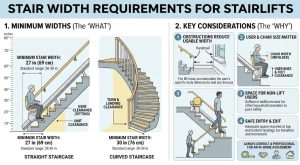
Establish feasibility instead of buying. Find out if your staircase can take a lift, where a platform lift could go, and if the house has anywhere a shaft could fit. Get those answers in writing and file them with the house documents. When the need arrives, the research is done and the decision takes days rather than weeks.
The Assessment Nobody Schedules
Most dealers perform a free in-home assessment with no requirement to buy anything afterward. Very few people book one before they need equipment.
An hour with a technician produces a map of what your house can accept. You find out which staircases take a lift and which do not, where a platform lift could go at each entry, if an elevator is possible and what the pit and overhead numbers would need to be, and roughly what each route costs.
That information does not expire, because the constraints of a particular staircase do not change. Having it on file turns a future crisis into a phone call.
Making the Conversation Easier
The barrier is usually not information. It is that raising the subject with an aging parent or a spouse feels like predicting decline, and the person on the receiving end often hears it as an argument about independence rather than a plan to protect it.
A few things help. Frame it around the house rather than the person, since asking what this house would need is easier to hear than asking what you will need. Tie it to work already happening, because a bathroom renovation is a natural moment to ask about blocking. Start with changes that benefit everyone, since better lighting and a second handrail are improvements nobody argues with. And go first if you can.
Whoever will be affected should be in the room and making the decisions. Equipment chosen for someone rather than with them gets resisted, and a stair lift that goes unused is worse than no stair lift at all.
A Reasonable Order to Work In
Map the barriers in the house as it stands, walking the route someone would take on an ordinary day and noting where difficulty would show up first.
Handle the low cost safety items next, since they pay off immediately at minimal expense.
Build the structural preparation into any work already scheduled.
Book a feasibility assessment and file what it tells you.
Leave the mechanical equipment until it is needed, with the research finished and the funding routes identified.
Done in that order, the expensive decisions arrive with the groundwork laid. The conversation happens at a kitchen table with time to think rather than in a hospital corridor with a discharge date two days out, which is the entire point.