Stair lift installation in a house built in 1910 is a different proposition than in the one built in 2010. The equipment is identical. What changes is everything around it, including where the outlets sit, what the treads are made of, how steep the flight runs, and what the owner wants left untouched. Older houses accept stair lifts more often than their owners expect, and the work goes smoothly when three practical constraints get checked before anything is ordered.
Electrical Supply & Where the Outlets Are
The Charging Point Requirement
Most residential stair lifts run on rechargeable batteries that top up whenever the carriage parks at a charge point. The charger plugs into a standard household outlet, and no dedicated circuit is needed for the majority of installations.
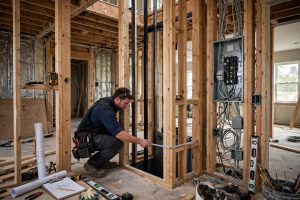
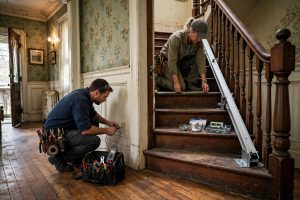
The complication is outlet placement. Houses wired before the 1960s have fewer receptacles, and the ones they have often sit mid-wall rather than near a staircase. The charger needs an outlet within reach of the top or bottom landing, and without one an electrician has to add it first.
This is the most common cause of a delayed install date. Checking both ends of the staircase takes two minutes and saves two weeks.
Older Wiring Worth Checking
Knob and tube wiring, two-prong ungrounded receptacles, and undersized panels all are common occurrences in houses of a certain age. A stair lift draws very little power, so the load is rarely the problem. What matters is that the receptacle is sound and properly grounded.
If the nearest outlet is a two-prong fixture on original wiring, have an electrician look at it rather than relying on an adapter.
Battery Operation During Outages
Older neighborhoods often sit on overhead lines that go down in storms, and a lift running on stored charge keeps working through an outage for a number of trips.
Flooring, Treads, & What the Rail Fastens To
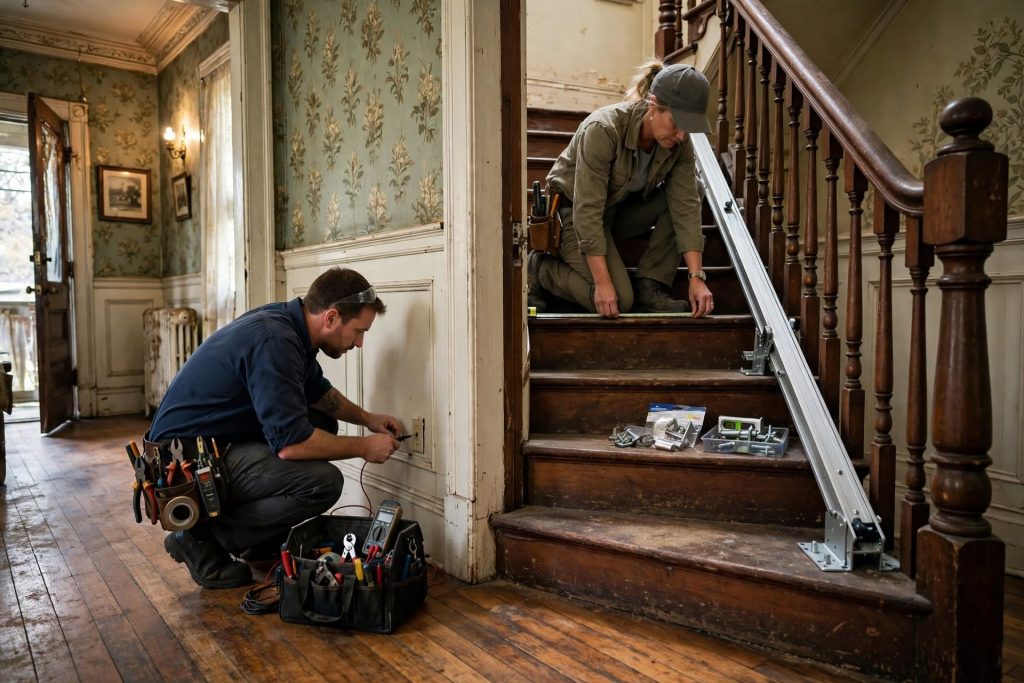
The Rail Mounts to the Treads
This answers the objection that comes up first in any period home. The rail carries its load through brackets bolted into the structural part of the treads, and the wall carries nothing at all.
Plaster, lath, wallpaper, wainscoting, and stonework are therefore irrelevant. A wall that would not hold a picture hook has no bearing on where a stair lift can go.
Hardwood, Carpet, & Stair Runners
Treads in older homes are usually solid hardwood, which is ideal for bracket mounting. Carpeted stairs work equally well, with brackets going through the carpet into the tread beneath. Stair runners held by rods usually need the rods removed where brackets land.
When the lift comes out, what remains is a set of small holes. On carpet those close up and go unnoticed. On bare hardwood they can be filled and refinished for very little.
Sequence Flooring Work First
If the stair carpet is being replaced or the treads refinished, do that before the lift goes in. Removing a mounted rail to run new flooring and remounting it costs money that is simple to avoid.
Stairway Geometry in Older Houses
Width & the Folded Measurement
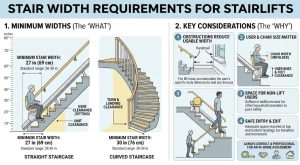
Stair widths in the high twenties are routine in older housing, and plenty of owners write off their staircase on that basis alone. The measurement that decides it is folded width, meaning how far the parked unit projects from the wall with the seat, arms, and footrest folded. Slim models come in around 10 to 11 inches.
Subtract that from the usable stair width and what remains is the passageway everyone else walks through. A 30 inch staircase with a slim unit leaves roughly 19 inches, which most households stop noticing within a week.
Measure from the wall to the outer edge of the tread rather than to the handrail. A handrail can project three or four inches into the run, costing exactly the margin that made the installation workable.
Pitch
Older staircases run steeper than modern code allows, since they predate current rise and run standards. Most stair lifts install on pitches between roughly 27 and 52 degrees, which covers the majority of steep older flights.
Where the Flight Turns
Center hall colonials frequently turn at a landing partway up, and smaller houses sometimes turn at the bottom to fit the staircase inside the footprint. Any turn means a curved rail fabricated for that flight, which costs several times a straight installation and takes weeks rather than days.
A flight that is straight for its full run but has one flared bottom step often still takes a straight rail, since the rail simply starts above that step. This case gets written off unnecessarily.
Headroom & Obstructions
Low ceilings, bulkheads, and beams crossing the flight can put a seated rider’s head into the obstruction. Some cases are solved with adjusted seat geometry and some are not, which is why a site visit settles this.
Doors, Handrails, & Fixtures in the Way
Older homes often have a door opening across the foot of the staircase. A folding rail hinges the bottom track section up out of the doorway when the lift is parked. Ask about it early, since it changes the folded width figure.
Handrails on the same side sometimes need shortening or relocating, and wall-mounted lights, switches, and radiators near the bottom step can sit in the carriage path. An assessment catches all of it.
Preserving the Character of the House
Owners of period homes usually care more about appearance than mechanics, and that concern is reasonable.
Installation can be planned around the rail configuration, landing space, which end the carriage parks at, and how the staircase reads from the main rooms. Original newel posts, banisters, and woodwork stay in place because nothing fastens to them.
What nobody should promise is that the equipment becomes invisible. It is a mechanical device on a staircase and it looks like one. It can be sited thoughtfully and removed later with minimal trace.
Settling It Before You Order
Three checks settle most of it. Look for a working outlet at both landings. Measure the usable stair width at the bottom, middle, and top, from the wall to the outer edge of the tread. Note any turn, landing, or low beam along the route.
With those three, any installer can tell you the equipment category and rough timeline before scheduling a visit. The measurement visit confirms the rest, and most dealers carry it out at no charge.