If stairs, raised entrances, porches, or changes in floor height are making it difficult to move around a home, a vertical platform lift can provide a practical accessibility solution. But what exactly is a vertical platform lift, how does it work, and how does it compare with a stairlift or residential elevator?
A vertical platform lift, often called a VPL or vertical wheelchair lift, is designed to move a person and their wheelchair or mobility device vertically between different levels. The right system depends on the home’s layout, vertical travel distance, available space, accessibility needs, and installation requirements.
What Is a Vertical Platform Lift?
A vertical platform lift is a powered accessibility device that moves a person and a mobility device vertically between two or more levels. It is commonly used for wheelchairs and mobility scooters, allowing the user to remain on the platform during travel. Unlike a stairlift, which carries a person along a staircase in a seat, a vertical platform lift travels straight up and down.
In residential applications, these lifts can provide access to porches, decks, raised entrances, split-level areas, basements, and different floors of a home.
The exact design varies by model. Some systems have an open platform, while others use an enclosure around the lift area for additional protection and security.
What Is a Vertical Platform Lift Used For?
A vertical platform lift can solve several different accessibility challenges depending on where it is installed.
Wheelchair Access Between Levels
One of the primary uses is moving a wheelchair user between levels without requiring the person to leave the wheelchair.
This can be particularly useful when a home has a raised first floor, split-level design, or multiple accessible living areas. The platform carries the wheelchair vertically while the user operates the lift using the appropriate controls.
Wheelchair Access to a Porch or Deck
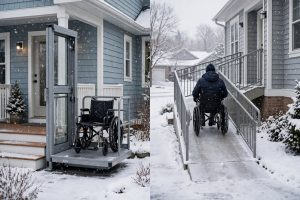
Outdoor vertical platform lifts are frequently considered for raised entrances.
A porch lift can provide access from ground level to:
- Front porches
- Rear decks
- Raised entrances
- Exterior ramps or platforms
- Elevated outdoor living spaces
This can make an otherwise inaccessible entrance more practical for wheelchair and mobility-device users.
Access Between Split Levels
Homes with short changes in elevation may not require a full residential elevator. A vertical lift can sometimes provide access between:
- A garage and living area
- A sunken room and main floor
- A raised entry and ground level
- Two split-level sections
The appropriate solution depends on the vertical distance and site conditions.
Indoor Vertical Platform Lift Applications
An indoor vertical platform lift can also provide access between floors or interior levels.
Possible applications include basement access, split-level homes, and other locations where a conventional elevator may require more space or construction.
How Does a Vertical Platform Lift Work?
Although designs vary, the basic operating concept is straightforward. A platform carries the user and mobility device vertically between designated levels.
The Platform
The platform is the area where the wheelchair or mobility device sits during travel.
Platform dimensions and weight capacity vary by equipment. The platform should be large enough for the intended mobility device and compatible with the user’s access and maneuvering requirements.
The Vertical Lifting Mechanism
The lift uses a powered mechanism to raise and lower the platform.
Different systems use different drive technologies, so homeowners should compare the manufacturer’s specifications, intended application, travel height, maintenance requirements, and installation requirements rather than assuming all VPLs operate identically.
Entry and Exit
The user enters the platform at one landing and exits at another.
Depending on the design, the installation may include gates, doors, safety barriers, controls, and landing access features. The configuration should allow safe entry and exit at every intended stop.
Safety Systems
Common safety features can include:
- Safety gates
- Door or gate interlocks
- Emergency stop controls
- Obstruction detection
- Non-slip platform surfaces
- Emergency lowering systems
- Battery backup on applicable models
The exact safety equipment depends on the lift model and installation.
What Is the Difference Between a Vertical Platform Lift and a Stairlift?
The biggest difference is how the user travels between levels.
Vertical Platform Lift vs Stairlift
| Feature | Vertical Platform Lift | Stairlift |
|---|---|---|
| User position | Remains on platform | Sits in chair |
| Wheelchair access | Yes, depending on model | Usually requires transfer |
| Travel direction | Vertical | Along staircase |
| Staircase required | No | Yes |
| Wheelchair remains intact | Yes | No |
| Outdoor applications | Common | Available with suitable models |
| Space used | Dedicated vertical footprint | Staircase |
| Best suited for | Vertical wheelchair access | Individual stair travel |
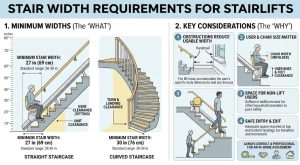
A stairlift can be a simpler solution when one person can safely transfer into a stairlift seat and the primary challenge is traveling along an existing staircase.
A vertical platform lift can be more appropriate when wheelchair access is important or when the desired travel path is vertical rather than along stairs.
When Is a Vertical Platform Lift Better Than a Stairlift?
A VPL may be worth considering when:
- A wheelchair needs to remain intact during travel
- Transferring to a stairlift seat is difficult
- The home has a raised porch or deck
- Outdoor vertical access is needed
- There is no suitable staircase for a stairlift
- A vertical connection between two levels is needed
When Is a Stairlift Simpler?
A stairlift may be more practical when the user primarily needs assistance traveling up and down an existing staircase and can safely use the seat.
The decision should be based on the user’s actual mobility requirements rather than simply choosing the equipment with the lowest purchase price.
What Is the Difference Between a Vertical Platform Lift and a Home Elevator?
A vertical platform lift and residential elevator both provide vertical accessibility, but they are different types of equipment.
Vertical Platform Lift vs Residential Elevator
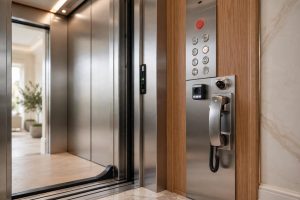
A VPL uses an accessible platform, while a residential elevator generally uses an enclosed or semi-enclosed cabin.
A home elevator may be better suited to multiple passengers, multiple floors, moving household items, and broader whole-home accessibility. A vertical platform lift can be particularly useful when the main requirement is wheelchair access over a specific vertical rise.
Installation requirements, available space, construction, travel height, and local requirements can also differ significantly.
When Should You Consider a Home Elevator Instead?
A residential elevator may deserve consideration when the goal is broader floor-to-floor transportation for:
- Multiple household members
- Wheelchair users
- Caregivers
- Families
- Household items
- Multiple floors
For a more detailed comparison, homeowners should evaluate the total installed requirements of both options.
What Are the Different Types of Vertical Platform Lifts?
Open Vertical Platform Lifts
Open VPLs use a platform with the necessary safety barriers and controls. They are commonly considered for outdoor applications such as porches and decks.
The installation may require additional protection depending on the environment and local requirements.
Enclosed Vertical Platform Lifts
Enclosed systems surround the travel area with a structure or enclosure.
This can provide additional protection and may be appropriate where the lift travels through an opening or between multiple levels.
Indoor Vertical Platform Lifts
Indoor systems can provide access between interior levels without requiring the user to travel along stairs.
Space, platform dimensions, landing clearance, and structural requirements should be evaluated before installation.
Outdoor Vertical Platform Lifts
Outdoor vertical platform lifts are commonly used at raised entrances, decks, porches, and other exterior locations.
Weather exposure, drainage, foundation requirements, corrosion protection, and enclosure options may affect the installation.
How Much Does a Vertical Platform Lift Cost?
Vertical platform lift cost varies substantially from one installation to another. Equipment pricing alone does not represent the complete project cost.
Vertical Platform Lift Cost Factors
The final price may depend on:
- Lift model
- Vertical travel height
- Weight capacity
- Platform dimensions
- Indoor or outdoor installation
- Number of stops
- Enclosure requirements
- Gates and doors
- Electrical work
- Site preparation
- Foundation work
- Permits
- Installation labor
- Customization
A straightforward installation can be significantly different from a project requiring structural modifications or a custom enclosure.
Equipment Cost vs Total Installed Cost
When comparing quotes, ask for the complete installed price.
The project may include:
- Equipment
- Delivery
- Installation
- Construction
- Electrical work
- Permitting
- Site preparation
- Enclosure
- Warranty or service coverage
An equipment-only price can therefore make two apparently similar systems look less expensive than they actually are.
Can a Vertical Platform Lift Be More Affordable Than a Home Elevator?
It can be, depending on the project.
A VPL may require less construction and a smaller installation footprint than a residential elevator, but that does not mean every VPL installation will automatically cost less.
Travel height, site preparation, equipment selection, structural work, and customization all influence the final price.
What Are the Requirements for a Vertical Platform Lift?
Space Requirements
The installation needs enough room for:
- The platform
- Landing areas
- Entry and exit
- Gate or door movement
- Travel path
- Required clearances
- Headroom
The exact footprint depends on the equipment and property.
Structural Requirements
Depending on the installation, structural work may involve:
- A foundation
- Supporting structure
- Mounting points
- Floor openings
- Landing construction
- Load requirements
An installer should evaluate the site before equipment is selected.
Electrical Requirements
Electrical requirements vary by system but can involve power connections, controls, lighting, and emergency systems.
Some models may also offer battery backup or emergency lowering.
Accessibility Requirements
The lift should be compatible with the user’s mobility device.
Important considerations include:
- Wheelchair width
- Wheelchair length
- Mobility scooter dimensions
- Platform size
- Door and gate clearance
- Entry and exit configuration
- Maneuvering space
Permits and Inspections
Permit and inspection requirements depend on the jurisdiction, property, installation type, and equipment.
The installer should identify applicable requirements before construction begins rather than assuming every installation follows the same process.
How Is a Vertical Platform Lift Installed?
Site Assessment
The first step is evaluating the property.
The installer typically determines the vertical rise, available footprint, entry and exit points, structural conditions, and accessibility requirements.
Prepare the Installation Area
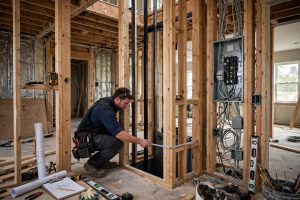
Depending on the project, preparation can include foundation work, landing construction, electrical preparation, framing, or enclosure work.
Install the Lift
The equipment installation can include:
- Platform
- Drive system
- Guide structure
- Controls
- Gates
- Safety systems
Test the Lift
Before the system is placed into regular service, the installation should be tested for travel, stops, controls, safety features, and applicable emergency systems.
Demonstrate Operation
The homeowner or user should receive instructions covering normal operation, safety procedures, emergency procedures, and maintenance requirements.
How Long Does Vertical Platform Lift Installation Take?
There is no universal installation timeline because projects vary considerably.
Equipment availability, site preparation, travel height, construction requirements, electrical work, weather, permits, and inspections can all affect the schedule.
What Happens During the First Visit?
The first visit generally focuses on:
- Home assessment
- Measurements
- Accessibility requirements
- Vertical travel
- Installation location
- Preliminary recommendations
The installer can then determine which lift configurations are feasible.
What Happens During Installation?
Once equipment and site preparation are ready, installation may involve construction, electrical work, assembly of the lift, safety-system installation, testing, and final adjustments.
A relatively straightforward installation may be much faster than a project requiring substantial structural work.
What Can Delay Installation?
Potential delays include:
- Permitting
- Equipment availability
- Custom components
- Structural modifications
- Outdoor weather
- Electrical work
- Inspection requirements
- Material delivery
Ask the installer for a project-specific schedule rather than relying on a generic installation timeframe.
How to Choose the Right Vertical Platform Lift
Step 1: Determine Who Will Use the Lift
Identify whether the primary user is a wheelchair user, mobility scooter user, caregiver, or multiple household members.
Step 2: Measure the Vertical Rise
Determine the distance between the lower and upper landing.
The total travel distance can influence equipment selection.
Step 3: Determine Platform Size
Consider the dimensions of the wheelchair or mobility scooter, the user’s maneuvering needs, and whether a caregiver may need to accompany the user.
Step 4: Choose Indoor or Outdoor Installation
Outdoor installations may require additional weather protection, drainage, foundation work, and equipment designed for exterior conditions.
Step 5: Evaluate the Installation Site
Review:
- Foundation
- Structural support
- Landing space
- Electrical access
- Clearance
- Travel path
Step 6: Compare Total Installed Costs
Compare complete project quotes instead of equipment-only prices.
Step 7: Get a Professional Assessment
A professional assessment can confirm whether the property can accommodate the lift and identify the equipment, construction, accessibility, and installation requirements.
Vertical Platform Lift Comparison Table
| Feature | Vertical Platform Lift | Stairlift | Home Elevator | Inclined Platform Lift |
|---|---|---|---|---|
| Wheelchair access | Yes, depending on model | Usually requires transfer | Often yes | Yes |
| Travel direction | Vertical | Along stairs | Vertical | Along stairs |
| Requires staircase | No | Yes | No | Yes |
| Outdoor use | Common | Available | Possible depending on system | Possible |
| Platform/cabin | Platform | Seat | Cabin | Platform |
| Construction | Moderate | Generally lower | Generally higher | Moderate |
| Best for | Vertical wheelchair access | Individual stair access | Whole-home accessibility | Wheelchair stair access |
Exact capabilities and installation requirements vary by equipment and property.
What Are the Advantages and Disadvantages of a Vertical Platform Lift?
Advantages
A vertical platform lift can offer:
- Wheelchair accessibility
- Ability to remain in the wheelchair
- No requirement for a staircase
- Indoor and outdoor applications
- Porch and deck access
- Direct vertical transportation
For the right property, these advantages can make a VPL a practical alternative to a stairlift or larger elevator system.
Disadvantages
Potential drawbacks include:
- Dedicated space requirements
- Construction or foundation work
- Platform footprint
- Enclosure requirements
- Higher costs for customized installations
- Ongoing maintenance
The best choice depends on the property and the user’s specific accessibility requirements.
Is a Vertical Platform Lift Right for Your Home?
A Vertical Platform Lift May Be a Good Choice If
Consider a VPL if:
- Wheelchair access is required
- The home has a raised entrance
- A porch or deck needs to be accessible
- Transferring to a stairlift is difficult
- Vertical access is needed between levels
Another Accessibility Solution May Be Better If
Another option may make more sense when:
- Only one person needs stair access
- The staircase is suitable for a stairlift
- The vertical rise is minimal
- A broader whole-home transportation solution is required
A professional assessment can help narrow down the appropriate equipment.
What Should You Ask a Vertical Platform Lift Company?
Before signing an agreement, ask:
- What platform size do I need?
- What is the weight capacity?
- Is the lift compatible with my wheelchair or scooter?
- Can it be installed indoors or outdoors?
- What structural work is required?
- Is a foundation required?
- What electrical work is needed?
- Are permits required?
- Is an enclosure included?
- What is the complete installed price?
- What warranty is included?
- What maintenance is required?
- Who handles repairs?
- How quickly can it be installed?
- What happens during a power outage?
- Is emergency lowering available?
Getting clear answers to these questions makes it easier to compare different accessibility solutions on an apples-to-apples basis.
What Is a Vertical Platform Lift? FAQs
What is a vertical platform lift?
A vertical platform lift is a powered accessibility system that moves a person and a wheelchair or other mobility device vertically between levels. It is commonly used for raised entrances, porches, decks, split-level areas, and other locations where stairs create an accessibility barrier.
How does a vertical platform lift work?
A powered lifting mechanism raises and lowers a platform between designated levels. The user enters the platform, activates the controls, and travels vertically while remaining on the platform.
How much does a vertical platform lift cost?
The cost depends on the equipment, vertical travel, platform size, installation location, structural preparation, electrical work, permits, enclosure, and labor. The complete installed price is more useful than an equipment-only price when comparing options.
Can a vertical platform lift be installed in a home?
Yes. Residential vertical platform lifts can be installed in many homes, including at porches, decks, raised entrances, split-level areas, and interior locations. The property must be evaluated to determine whether the desired installation is feasible.
Can a wheelchair user use a vertical platform lift?
Yes. Vertical platform lifts are specifically designed to transport mobility devices such as wheelchairs, subject to the platform’s dimensions and weight capacity.
What is the difference between a vertical platform lift and a stairlift?
A vertical platform lift carries the user vertically on a platform, usually with the wheelchair remaining on the platform. A stairlift carries an individual along a staircase in a seat and generally requires the user to transfer from a wheelchair.
Does a vertical platform lift need a shaft?
Not necessarily. Requirements depend on the type of VPL and its configuration. Some systems use an open platform while others incorporate an enclosure or shaft-like structure.
Can a vertical platform lift be installed outside?
Yes. Outdoor VPLs are commonly used for raised porches, decks, and exterior entrances. Outdoor equipment must be appropriate for the installation environment and may require additional foundation, drainage, weather protection, or enclosure considerations.
How high can a vertical platform lift go?
The maximum travel height depends on the specific lift model and configuration. A professional assessment is necessary to determine which equipment can safely serve the required vertical distance.
Does a vertical platform lift require a permit?
It may. Permit and inspection requirements vary by jurisdiction, property, installation type, and equipment. The installer should confirm the applicable requirements before work begins.
How long does it take to install a vertical platform lift?
Installation time varies based on the lift, vertical travel, site preparation, construction, electrical requirements, equipment availability, and inspections. A straightforward project can differ substantially from an installation requiring structural modifications.
What happens if the power goes out?
Some systems include battery backup or emergency lowering capabilities, but features vary by model. Ask the installer exactly how the proposed system operates during a power outage.
Vertical Platform Lift Maintenance and Safety
How Often Should a Vertical Platform Lift Be Serviced?
Service intervals depend on the equipment and manufacturer requirements. Follow the manufacturer’s maintenance schedule and any applicable local requirements.
What Maintenance Does a Vertical Platform Lift Need?
Maintenance can involve inspection of:
- Safety systems
- Controls
- Drive components
- Platform
- Gates and interlocks
- Electrical components
Outdoor equipment may also require additional attention because of environmental exposure.
What Happens If a Vertical Platform Lift Stops Working?
Follow the equipment’s emergency procedures and contact the appropriate service provider. Do not attempt to bypass safety systems or perform repairs without the necessary qualifications.
Why Professional Installation and Service Matter
A vertical platform lift is accessibility equipment that must operate reliably and safely. Proper installation, testing, maintenance, and service help ensure that the system performs according to its intended specifications.
Conclusion — Is a Vertical Platform Lift Right for Your Home?
A vertical platform lift can provide practical vertical accessibility for people who use wheelchairs, mobility scooters, and other mobility devices. Unlike a stairlift, it allows the user to remain on a platform while traveling vertically, making it particularly useful for raised entrances, porches, decks, split-level areas, and selected interior applications.
The right lift depends on more than the equipment itself. Platform size, weight capacity, vertical travel, available space, structural requirements, electrical work, installation conditions, and total project cost all need to be considered.
If you are comparing a vertical platform lift with a stairlift, residential elevator, or another accessibility solution, start with a professional assessment of your home. A qualified accessibility professional can evaluate the property, identify suitable equipment, explain installation requirements, and provide a detailed project estimate.
Ready to determine whether a vertical platform lift is right for your home? Schedule a professional home accessibility assessment or request a vertical platform lift consultation.