Most people searching for home accessibility solutions already know something in the house has become a barrier. The staircase, the front steps, the second-floor bathroom. What they do not know is which piece of equipment actually solves it, what it costs, and who helps pay for it. Here is the direct answer to all three.
The right solution comes down to three questions: what barrier are you removing, can the person walk and transfer into a seat, and how many inches of vertical rise are involved. Answer those and the product choice narrows to one or two options almost every time.
Match the Solution to the Barrier
The person can walk and transfer, but stairs are unsafe
This describes the majority of homeowners in New Hampshire calling about accessibility. Knees, hips, balance, cardiac limits, or recovery from surgery make the staircase the single hardest part of the day.
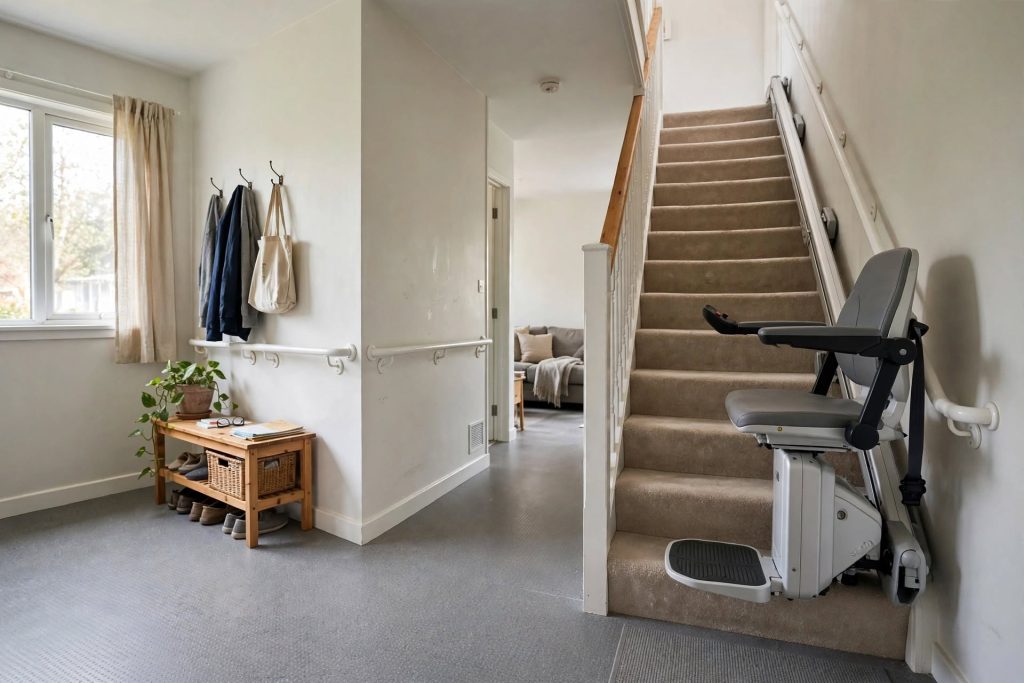
A stair lift is the answer here. It mounts to the treads of the staircase, not the wall, and it does not require structural changes. A straight stair lift fits any staircase that runs floor to floor without a turn or landing, and it is usually installed in a single morning. If your staircase has a bend, a landing, or a spiral, you need a curved stair lift, which is built from measurements taken in your home so the rail follows the exact shape of the stairs.
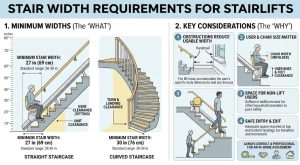
Older New England homes frequently have narrow staircases. Folding rails, slim seats, and power folding footrests solve most of those layouts without giving up walking room for other family members.
The person uses a wheelchair and cannot transfer
A stair lift stops being the right call the moment the user cannot safely get out of the chair and into a seat. At that point the equipment has to carry the person and the mobility device together.
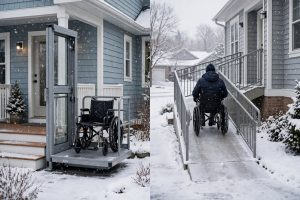
A wheelchair lift for the home, also called a vertical platform lift or VPL, does exactly that. The user rolls onto the platform, rides up, and rolls off. VPLs handle one level change at a time and work indoors or outdoors, which makes them the standard fix for garage-to-house steps, raised decks, and front entrances with too much rise for a ramp.
The barrier is the entrance, not the interior
If the problem is three or five steps at the front door, start with the rise height. Accessible slope guidelines call for roughly one foot of ramp length per inch of rise, so a 30-inch rise needs about 30 feet of ramp plus landings. Where the yard has room, wheelchair ramps are the least expensive and least mechanical answer. Where it does not, a VPL occupies a few square feet and does the same job.
The need is permanent, multi-floor, and long term
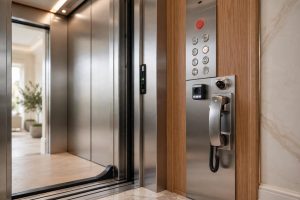
When someone will be using a mobility device for years, uses more than one upper floor, or the household wants the accessibility built into the property itself, a residential elevator becomes the practical choice. It carries the person, their device, groceries, and laundry, and it is the only option on this list that reliably adds resale value to the home.
What Home Accessibility Solutions Actually Cost
Real numbers, installed, based on current market pricing:
- Straight stair lift: roughly $3,000 to $5,500 installed for most residential staircases.
- Curved stair lift: roughly $7,000 to $15,000, since the rail is custom manufactured to match your staircase.
- Vertical platform lift: commonly $4,000 to $12,000 installed. Rise height, platform size, and indoor versus outdoor placement drive the spread.
- Wheelchair ramp: the widest range of all, set almost entirely by total rise, decking material, and permit requirements.
- Residential elevator: basic installations start around $25,000 and climb past $50,000 with more floors served and more finish options.
Two cost drivers surprise people. First, curved rails are manufactured to your staircase, so lead time and price both climb with the number of turns. Second, outdoor equipment costs more than the same indoor unit because of weatherproofing, and in New Hampshire that difference is not optional.
If the need is short term, recovery from a hip replacement or a family member staying for a season, renting a straight stair lift costs a fraction of buying one and gets removed cleanly when it is no longer needed.
Who Helps Pay for It
Start with the disappointing part so you can plan around it. Medicare does not pay for home modifications like ramps, stair lifts, or widened doorways. Standard homeowners insurance does not either.
What does help:
Veterans. The VA’s Home Improvements and Structural Alterations benefit, known as HISA, is a lifetime benefit covering medically necessary home modifications. The higher tier applies to service-connected disabilities and to non-service-connected disabilities where the veteran carries a service-connected rating of 50 percent or more. A lower tier applies to other non-service-connected cases. It is available to homeowners and renters, requires documented medical necessity from a VA physician, and is applied for through the Prosthetics and Sensory Aids Service at your VA medical center. Larger housing adaptation grants exist separately for veterans with qualifying service-connected disabilities. New Hampshire has a large veteran population and these benefits are badly underused.
New Hampshire Medicaid. The Choices for Independence waiver helps older adults and adults with chronic conditions stay in their own homes, and home modifications are a covered service under it. Applications go through NH Easy or your district DHHS office, and the Aging and Disability Resource Center, formerly ServiceLink, assists with the paperwork. Budget for the timeline: approval commonly takes three months or longer.
Granite State Independent Living. GSIL staff consult on accessibility needs statewide, help build a plan, identify funding sources, and refer to licensed vendors. Their home access work covers ramps, grab bars, bathroom modifications, stair lifts, and durable medical equipment.
Rural homeowners. The USDA Section 504 Home Repair Program offers grants for very low income homeowners age 62 and older, plus low-interest loans for necessary repairs and safety improvements. Much of northern and western New Hampshire qualifies as rural under this program.
Everyone else. Monthly stair lift financing is how most families actually pay for equipment, and it is worth running the math before ruling anything out on price.
The One Comparison That Matters
A single year in a New Hampshire assisted living facility costs multiples of a stair lift, a VPL, or in many cases a full elevator installation. Accessibility equipment is a one-time purchase against a recurring annual cost, and it is the difference between staying in a paid-off house and leaving it. Families who frame the decision that way stop asking if the equipment is expensive and start asking how quickly it can be installed.
What a Real In-Home Assessment Should Cover
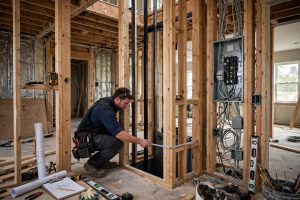
Any dealer can quote from a phone call. That quote is a guess. A useful assessment measures and documents:
- Total rise and run of the staircase, plus width at the narrowest point
- Doorway swing and clearance at the top and bottom landings
- Which side the user bears weight on, which decides which side the seat mounts on
- Electrical access, since most lifts need a standard outlet near the rail
- Frost line and drainage for anything installed outdoors
- Permit requirements in your town, which vary across New Hampshire
If a company will not put those measurements in writing before taking a deposit, keep calling.
Mistakes That Cost Homeowners Money
Buying used equipment for a curved staircase. Curved rails are cut for one specific home. A secondhand curved rail almost never fits another staircase, and the modification cost erases the savings.
Choosing a stair lift for a full-time wheelchair user. If two people are needed for every transfer, the equipment has created a new problem instead of solving one.
Waiting for a fall. Nearly every emergency installation costs more, moves slower, and comes with fewer funding options than the same project planned three months earlier. Grant programs run on paperwork timelines, not hospital discharge timelines.
Skipping the service plan. Lifts are mechanical equipment with batteries, safety sensors, and moving parts. Annual service is what keeps them working in year eight.
Frequently Asked Questions
What are the most common home accessibility solutions?
Stair lifts, wheelchair ramps, vertical platform lifts, residential elevators, grab bars, walk-in showers, and widened doorways. Stair lifts and ramps account for the largest share because they solve the two barriers most homes have: the staircase and the front entrance.
Does Medicare pay for stair lifts or home modifications?
No. Medicare treats them as home modifications rather than durable medical equipment. Medicaid waiver programs, VA benefits, USDA grants, and nonprofit programs are the funding routes that do apply.
How much does it cost to make a home wheelchair accessible?
It depends on how many barriers you are removing. A single entrance ramp or a VPL for a garage step lands in the low thousands. Full multi-level access with a residential elevator and bathroom modifications runs into five figures. The assessment is what turns that range into a number.
What is the cheapest way to make a home accessible?
Address one barrier at a time, starting with the one causing daily risk. Grab bars, improved lighting, and threshold ramps cost very little. Renting a stair lift instead of buying is the cheapest route when the need is temporary.
Is a stair lift or a home elevator better?
A stair lift if the person can transfer into a seat and you want a fast, low-cost, non-structural fix. An elevator if the person stays in a mobility device, multiple floors are involved, or you want the accessibility built permanently into the property.
Do home accessibility modifications affect resale value?
Ramps and stair lifts are removable and treated as neutral by most buyers. Residential elevators are generally treated as a value-adding feature, particularly in multi-story homes.
How long does installation take?
A straight stair lift is typically installed in a few hours. Curved stair lifts take longer because the rail is manufactured to your measurements. VPLs and elevators require site prep and permitting, so plan in weeks, not days.
Get a Straight Answer About Your Home
The fastest way to know which of these home accessibility solutions fits is to have someone measure the actual staircase, the actual entrance, and the actual rise. Stair Lifts & Ramps of New England is a family-owned company serving homeowners across New Hampshire from Salem and the Lakes Region, and the in-home assessment is free with no obligation.
Call 603-893-1523 or request your free in-home assessment and get measurements, a written quote, and a clear answer on which funding programs you qualify for.