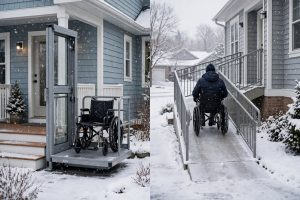
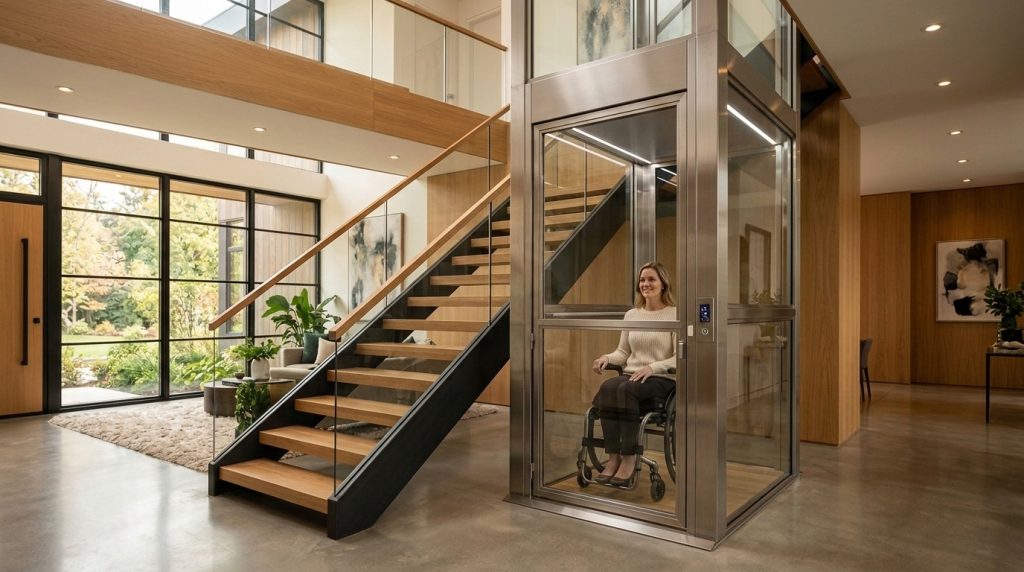
For individuals using wheelchairs, power scooters, or facing severe stair-climbing challenges, maintaining true independence at home or in commercial spaces can feel daunting. While modular ramps require massive square footage and traditional residential elevators demand extensive home structural alterations, Vertical Platform Lifts (VPLs) often referred to as porch lifts or residential wheelchair lifts offer the perfect, space-saving compromise.
Whether you are looking to overcome a 3-foot porch barrier or navigate a 14-foot multi-level structure, choosing the right vertical platform lift requires understanding drive mechanics, weight capacities, site prep, and overall ownership costs.
In this ultimate guide, we synthesize industry technical standards, real-world installation insights, and complete buyer considerations to help you select, install, and maintain the perfect VPL for your property.
What is a Vertical Platform Lift (VPL)?
A Vertical Platform Lift (VPL) is an electro-mechanical or hydraulic lifting device designed to elevate a mobility device user (wheelchair, power chair, or scooter) and an accompanying caregiver safely between different floor elevations.
Unlike standard stairlifts which require the user to transfer out of their wheelchair onto a swivel chair a VPL allows users to remain seated in their mobility device, roll directly onto a flat platform, and travel straight up and down smoothly.
Key Use Cases:
- Residential Entryways: Elevating users over porch steps, decks, or elevated front doors.
- Garage Access: Transitioning from sunken garage floors into raised home kitchen entrances.
- Multi-Level Interior Access: Bypassing full flights of interior stairs in open-foyer residential layouts.
- Commercial ADA Compliance: Providing physical accessibility for public buildings, churches, schools, and offices without major construction.
Vertical Platform Lifts vs. Ramps vs. Elevators: Direct Comparison
Before investing, it is critical to understand how a VPL stacks up against alternative accessibility solutions:
| Feature | Vertical Platform Lift (VPL) | Modular Wheelchair Ramp | Residential Home Elevator |
| Footprint / Space Needed | Minimal (approx. 5′ x 5′ footprint) | Extensive (1 ft length per 1 in rise) | Moderate to Heavy (Requires dedicated hoistway shaft) |
| Lifting Height | Up to 14 Feet | Best for under 3–4 Feet elevation | Unlimited (Multi-story homes) |
| Weight Capacity | 750 lbs – 1,000 lbs | Unlimited (depends on deck/ground) | 900 lbs – 1,500 lbs |
| Site Alteration | Minor concrete pad / deck alignment | Zero (temporary modular ramps) | Heavy construction & structural shaft building |
| Average Cost Range | $4,500 – $14,000+ | $1,500 – $5,000 | $25,000 – $50,000+ |
Primary Types of Vertical Platform Lifts
Understanding the primary architectural configurations of VPLs is the first step in deciding what fits your floorplan.
1. Unenclosed (Open) Vertical Platform Lifts
- Best For: Heights up to 4 to 6 feet (depending on local codes) in low-impact areas.
- How It Works: Features an open platform guarded by 42-inch high solid side walls and self-locking safety gates.
- Key Advantage: Cost-effective, quick to install, minimal obstruction to view and space.
2. Enclosed Vertical Platform Lifts
- Best For: Higher elevations (up to 14 feet) or severe weather environments.
- How It Works: The platform travels inside a fully factory-built or custom-built weather-proof enclosure equipped with integrated doors and acrylic or aluminum side panels.
- Key Advantage: Full weather protection against rain, snow, and ice; maximum passenger safety and enclosure privacy.
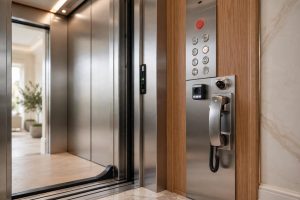
3. Shaftway / Hoistway Lifts
- Best For: Seamless indoor integration or custom exterior home extensions.
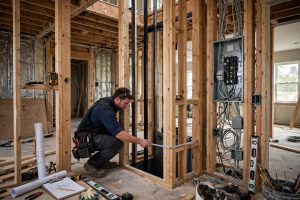
- How It Works: Designed to be installed inside a custom-built enclosed shaft (similar to an elevator shaft) provided by a general contractor.
- Key Advantage: Blends completely into home interior architecture; provides a high-end luxury appearance at a fraction of elevator pricing.
4. Portable / Commercial VPLs
- Best For: Schools, auditoriums, theaters, and temporary stage access.
- How It Works: Mounted on heavy-duty caster wheels, allowing staff to roll the lift into position when needed and store it away afterward.
Drive Systems Explained: Acme Screw vs. Hydraulic vs. Belt Drive
The internal drive mechanism dictates the lift’s noise level, maintenance demands, cold-weather reliability, and overall ride smoothness.
1. Acme Screw Direct Drive
- Mechanism: A threaded steel rod turns against a heavy-duty nut to drive the platform up and down.
- Pros: Highly reliable, self-locking (cannot free-fall), excels in freezing cold climates (no hydraulic fluid to thicken).
- Cons: Slower travel speed (approx. 10 ft/min), requires periodic rod lubrication.
2. Hydraulic Drive
- Mechanism: A hydraulic pump moves fluid into a cylinder to push the lift carriage upward.
- Pros: Extremely smooth ride quality, whisper-quiet operation, high lifting capacities (up to 1,000 lbs easily).
- Cons: Higher upfront cost; fluid can thicken in extreme outdoor winter temperatures unless equipped with specialized fluid heaters.
3. Chain & Belt Winding Systems
- Mechanism: Aircraft-grade cables, reinforced belts, or heavy chains wind onto a motor-driven drum.
- Pros: Smooth acceleration and high energy efficiency.
- Cons: Requires regular cable tension monitoring and slack-cable safety device checks.
Key Safety Features You Must Expect (ASME A18.1 Compliance)
Safety is non-negotiable when dealing with vertical elevation devices. Certified VPLs meet or exceed ASME A18.1 Safety Standards for Platform Lifts and Stairway Chairlifts. Look for the following mandatory safety systems:
- Under-Platform Obstruction Sensors: Pan-style safety sensors located underneath the floor platform that automatically stop descent instantly if an object, pet, or obstacle is detected below.
- Emergency Stop Button & Alarm: Flush-mounted tactile controls with visual and audible distress indicators.
- Emergency Lowering System: Manual hand-crank or dual 12V DC battery backup systems that allow safe platform descent during power outages.
- Interlocking Safety Gates: Doors and gates that lock automatically during transit and refuse to open unless the platform is level with the landing.
- Non-Skid Flooring & Roll-Stop Flaps: High-traction flooring coupled with automatic folding ramps that flip up to lock wheelchair wheels in place when the lift leaves the ground level.
How Much Does a Vertical Platform Lift Cost?
Pricing for a vertical platform lift depends on lifting height, drive system, site preparation, and custom additions. Below is an itemized cost breakdown:
Base Equipment Costs
- Standard Residential Open VPL (4–6 ft rise): $4,500 – $8,500
- Tall Residential / Commercial VPL (10–14 ft rise): $9,000 – $15,000
- Fully Enclosed / Shaftway VPL System: $12,000 – $22,000+
Essential Installation & Site Prep Factors
- Concrete Slab Construction: A dedicated VPL requires a level 4-inch reinforced concrete pad ($800 – $2,500 depending on ground grading).
- Electrical Connection: Dedicated 110V/120V AC circuit setup by a licensed electrician ($300 – $1,200).
- Local Building Permits & Inspections: City/State permit fees and elevator inspector approvals ($200 – $1,000).
- Professional Certified Installation: Professional labor and mechanical testing ($1,500 – $3,500).
| ★ IMPORTANT INSTALLATION WARNING While DIY kits exist online, DIY installation voids manufacturer warranties in 95% of cases and risks severe safety code violations. Always hire certified factory installers. |
Customization Options & Access Configurations
A vertical platform lift should adapt to your property layout, not force you into costly home modifications. VPLs offer three distinct platform entry/exit configurations:
- Straight-Through (Pass-Through): Enter from the front, exit through the back. The simplest and most natural flow.
- 90-Degree Adjacent Access: Enter from the front, exit to the left or right side. Ideal for tight corner porches or narrow garage turns.
- Same-Side Entry/Exit: Enter and exit from the exact same side (requires reversing out or turn space).
Aesthetic Customization Options:
- Custom powder-coated finishes to match house siding or porch decor.
- Clear acrylic or glass side panels for open-sightline residential aesthetic.
- Power-assisted auto-gate openers for individuals with limited arm/hand mobility.
Essential Maintenance & Safety Checklist
To guarantee a long operating lifespan (typically 12 to 20 years) and uninterrupted performance, follow this preventative maintenance regimen:
Monthly Routine (User Check):
- Test under-platform obstruction sensors by pressing against the bottom pan.
- Test emergency stop button and audible alarm.
- Clean debris, leaves, snow, and ice out of the guide rails and bottom landing pad.
Semi-Annual Routine (Professional Service):
- Inspect drive screw lubrication or hydraulic fluid levels.
- Test battery power backup discharge cycles and terminal connections.
- Check door interlock alignment and safety switch tolerances.
- Inspect mechanical brake pads and emergency slack-cable safety switches.
Frequently Asked Questions (FAQs)
Q1. What is the average lifespan of a vertical platform lift?
With routine annual maintenance, high-quality residential vertical platform lifts (such as Harmar, AmeriGlide, or Bruno) typically last between 15 to 20 years.
Q2. Will a vertical platform lift work during a power outage?
Yes! Most modern residential VPLs come standard with or offer optional DC battery backup power systems. These systems provide 30 to 40 complete continuous lifting cycles even when main house power fails.
Q3. Can a vertical platform lift be installed in extreme winter weather?
Absolutely. Heavy-duty outdoor VPLs are engineered with weatherized electrical control boxes, sealed motor housings, and marine-grade wiring. For freezing regions (like New England or Northern US), Acme screw drive systems or fluid-heated hydraulics are recommended to handle sub-zero temperatures reliably.
Q4. Does Medicare or private health insurance cover VPL costs?
Standard Medicare Part B generally considers VPLs as “home modifications” rather than durable medical equipment (DME), meaning they are rarely covered directly. However, Medicare Advantage plans, VA Housing Grants (HISA/SAH), Medicaid Waivers, and state-based accessibility grants frequently provide partial or full coverage.
Q5. What floor surface is required for a VPL installation?
A flat, level 4-inch poured concrete pad with a strength rating of 3,500 PSI is required to securely anchor the lift tower base bolts and prevent shifting over time.
Final Thoughts: Restoring Independence to Your Property
Installing a Vertical Platform Lift is one of the most effective, space-conscious, and value-adding accessibility upgrades you can make to a residential or commercial property. By combining compact engineering with heavy lifting capacities, a VPL bridges physical barriers smoothly, safely, and independently.
| ★ NEXT STEPS FOR HOMEOWNERS & BUSINESSES If you are evaluating accessibility solutions for your property, schedule a free in-home site evaluation with our certified mobility specialists today. We will measure your elevation rise, evaluate local permit requirements, and recommend the exact lift configuration for your budget and home style. |